Ampicillin
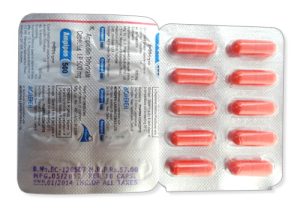
In brief
- Ampicillin is a prescription-only antibiotic in Australia and other regulated markets, but some online pharmacies may claim to supply it without a prescription. It is available from pharmacies and hospital suppliers in capsules, oral suspension, and injection vials.
- Ampicillin is used to treat susceptible bacterial infections such as respiratory, urinary, gastrointestinal, and some hospital-acquired infections. It works by inhibiting bacterial cell wall synthesis, which causes the bacteria to break down and die.
- The usual dose depends on the infection: adults commonly take 250–500 mg every 6 hours by mouth for mild to moderate infections, or 1–2 g IV every 4–6 hours for severe infections. Children are dosed by weight.
- The form of administration is oral capsules/tablets, oral suspension, or dry powder for injection given intravenously or intramuscularly.
- Ampicillin usually starts working within 30–60 minutes after an oral dose, while injectable forms may begin acting within a few minutes to an hour.
- The duration of action is typically about 4–6 hours, which is why it is often dosed several times a day.
- Avoid alcohol or limit it, as alcohol may worsen stomach upset and make it harder to recover from infection; it is best to follow your clinician’s advice.
- The most common side effects are nausea, diarrhoea, vomiting, mild rash, and oral or vaginal thrush.
- Would you like to try ampicillin without a prescription?
Basic Ampicillin Information
- INN (International Nonproprietary Name): Ampicillin
- Brand names available in Australia: Ampicillin is generally supplied as a generic or equivalent product description rather than one fixed local brand.
- ATC code: J01CA01; J01CR01; J01CR50
- Forms & dosages: Capsules or tablets 250 mg, 500 mg; oral suspension 125 mg/5 mL, 250 mg/5 mL; dry powder for injection 250 mg, 500 mg, 1 g, 2 g
- Manufacturers in Australia: Not specified
- Registration status in Australia: Prescription only (Rx)
- OTC / Rx classification: Prescription only (Rx) in regulated markets
Ampicillin Availability And Price Landscape In Australia
Looking for ampicillin in Australia usually starts with a simple problem: it is not a common shelf item in community pharmacy.
Most shoppers run into scarcity first, then brand substitution, then price pressure.
Depending on the need, ampicillin may be supplied through hospital channels, compounding, or special import pathways rather than as a standard front-of-shop medicine.
That is especially true for ampicillin powder for injection, which is much more likely to sit in a hospital store than in a suburban retail dispensary.
Availability can also vary between metro and rural areas, and rural patients often rely more heavily on posted scripts, local chemists, or hospital pharmacies.
Australians commonly compare prices across Chemist Warehouse, Priceline and TerryWhite Chemmart before asking a pharmacist for help.
That comparison is usually about whether a private supply is possible, whether a substitution is suitable, and whether the medicine can be ordered in quickly.
PBS vs private supply also matters.
If a formulation or indication is PBS listed, out-of-pocket costs may be lower, but private supply and substitutes are still common in practice.
Under TGA rules, ampicillin remains prescription only, so buy ampicillin online searches still end up needing a valid script or pharmacist-led process.
National Pharmacy Chains And What They Stock
What people actually see at the counter is usually a generic ampicillin request, not a specific display item.
Big chains tend to check wholesaler availability, then offer to order the medicine in if the exact product is not on hand.
A pharmacist may also suggest an equivalent beta-lactam if the prescriber has allowed substitution and the supply issue is practical rather than urgent.
- Community pharmacies may stock limited oral forms, but injection products are usually hospital or special-order items.
- Brand substitution is common when the requested pack is out of stock.
- Pharmacists often explain whether a private script or PBS supply is possible before the customer pays.
Online Pharmacy Trends And Telehealth E-Prescriptions
Telehealth has made it easier for some Australians to obtain an e-script, then send it to an Australian pharmacy for dispensing or delivery.
That convenience matters when a patient is juggling work, childcare, or a Friday-evening order and does not want to wait in line.
Online pharmacy fulfilment is useful for stock checks, but the legal status does not change just because the order is placed on a website.
In our online pharmacy, ampicillin is available without a prescription, with discreet delivery to Australia in 9-21 days.
Price Ranges By Pack Size And PBS/Private Access
For shoppers, the most useful price question is often not the brand name but the pack size and supply pathway.
Smaller oral packs may be less expensive upfront, while injection vials and special-order items can cost more because of handling and sourcing.
Private pricing can vary by wholesaler, pharmacy margin and whether the item has to be ordered in.
That is why a pharmacy price comparison often ends with, “Can you get it today, or can you call me when it arrives?”
Patient Experiences And Satisfaction Levels
People who have used ampicillin tend to talk first about whether the pharmacist explained it clearly.
Trust in pharmacist advice is a common positive, especially when a patient is unsure about timing, food, or side effects.
Frustration usually centres on prescription delays and the wait for a special-order supply.
In local health communities and ProductReview-style forums, people also ask whether the medicine should settle tummy upset or a rash quickly.
Because ampicillin side effects can be noticeable, patients often judge the medicine by how fast the infection settles and whether the dosing fits daily life.
Forum-Style Feedback And Common Questions
- What people liked: Clear pharmacist advice, a straightforward dosing schedule, and improvement in symptoms when the bacteria were susceptible.
- What caused frustration: Delay getting the script dispensed, pharmacy ordering time, and having to return for a substitute pack.
- What prompted medical review: Rash, persistent diarrhoea, vomiting, or no symptom improvement after starting treatment.
Reported Benefits, Frustrations And Adherence Issues
Oral suspension is usually easier for children and for adults who struggle with capsules, but it still needs careful measuring and refrigeration once reconstituted.
Some patients mention that taking ampicillin 30 to 60 minutes before meals is manageable, while others miss doses because it clashes with breakfast or shift work.
Ampicillin capsules are generally judged well when the schedule is understood from the start.
When it is not, adherence drops fast, and that can undermine the response.
Product Overview And Brand Variants
Ampicillin is the International Nonproprietary Name, or INN, for this penicillin-family antibiotic.
Globally, it is sold as generic ampicillin and under names such as Penbritin, Principen, Totacillin, Unicillin and Standacillin.
In Australia, patients are more likely to see equivalent product descriptions than the exact same overseas brand.
That is normal for ampicillin sodium, ampicillin injection and oral products supplied through different market arrangements.
INN, Local Naming And Common Brand References
INN: Ampicillin.
International brand references: Penbritin, Principen, Totacillin, Unicillin and Standacillin.
Australian presentation: Generic or equivalent description, depending on supply.
Dosage Forms, Pack Types And Strengths
| Form | Common Strengths | Usual Pack Type |
|---|---|---|
| Capsules or tablets | 250 mg, 500 mg | Blister packs, strips or boxes |
| Oral suspension | 125 mg/5 mL, 250 mg/5 mL | Amber or opaque bottle |
| Dry powder for injection | 250 mg, 500 mg, 1 g, 2 g | Vial for reconstitution |
Patients sometimes ask for an ampicillin 1 g vial when hospital treatment is being discussed, but the final supply depends on route and setting.
Regulatory Status In Australia
The legal position is straightforward: ampicillin is prescription only and regulated under TGA requirements.
That means access depends on a valid script, and telehealth-linked scripts still need to be dispensed according to pharmacist rules.
For rural patients, posted prescriptions and local chemist supply can make the difference between same-day treatment and a delay.
Hospital pharmacies also play a bigger role when the product is needed for inpatient IV therapy.
| Regulatory Point | Practical Meaning For Patients |
|---|---|
| TGA regulation | Supply follows Australian medicine law and dispensing standards |
| Prescription only | Not a casual OTC purchase |
| PBS access | May reduce cost for listed formulations or indications |
| Private supply | Common when PBS listing is not available or stock is limited |
TGA Approval And Prescription Status
Patients sometimes expect to walk in and buy ampicillin online the same way they would buy toiletries, but antibiotics are not handled that way in Australia.
The prescription-only rule reflects safety, resistance concerns and the need to match treatment to likely susceptibility.
PBS Access And Private Prescription Supply
When PBS access applies, out-of-pocket costs may be lower, but supply pathways still vary by pharmacy stock and wholesaler availability.
Private scripts are common, especially when substitution or special ordering is needed.
Indications In Local Medical Practice
What people usually want to know is simple: what is ampicillin actually used for?
In practice, it is used for susceptible respiratory and urinary infections, and in hospital settings for severe infection and IV therapy.
It may also appear in treatment plans for gonorrhoea or meningitis when combination therapy is appropriate and the organism is expected to be susceptible.
Australian prescribing depends on resistance patterns, pathology results and the clinician’s judgement, not on a one-size-fits-all rule.
Common Approved Or Standard Uses
| Condition | Usual Form | Route | Note |
|---|---|---|---|
| Respiratory or urinary infection | Capsules or oral suspension | Oral | Mild to moderate cases when susceptible |
| Severe infection or sepsis | Injection | IV | Hospitalised patients only |
| Gonorrhoea | Oral dose plus probenecid | Oral | Specific single-dose regimen |
| Meningitis | Injection with other agents | IV | Supportive therapy and specialist care |
When Clinicians Choose Ampicillin Over Alternatives
Prescribers may choose ampicillin when the likely bacteria fit the drug’s spectrum and the clinical picture supports it.
That is particularly relevant for ampicillin for UTI when susceptibility is known, or in hospital IV therapy for susceptible Enterococcus and Streptococcus.
Ampicillin vs amoxicillin is a common question, and the answer usually comes down to absorption, convenience and the infection site.
How It Works In The Body
Think of ampicillin as a beta-lactam antibiotic that weakens the wall bacteria need to survive.
When susceptible bacteria cannot build a strong cell wall, they break down and die.
That is why the medicine has to be taken exactly as directed and why the timing of each dose matters.
Clinical classification: ATC code J01CA01, an extended-spectrum penicillin.
Related form: ampicillin sodium is used in injection products.
Simple Explanation For Patients
For patients, the message is uncomplicated: ampicillin only works on bacteria that are sensitive to it.
It will not help with viral illnesses, and stopping early can leave the infection partly treated.
Clinical Mechanism And Classification
From a pharmacology perspective, it sits within the beta-lactam class and the extended-spectrum penicillin group.
That classification matters because it explains both its usefulness and its limits.
Dosage And Administration
People usually want the practical dosing answer before anything else.
For adults, oral ampicillin is commonly 250 to 500 mg every 6 hours for respiratory or urinary infections.
Severe infection may require 1 to 2 g IV every 4 to 6 hours in hospital.
Oral ampicillin is usually taken 30 to 60 minutes before meals for better absorption.
| Indication | Typical Adult Dose | Duration |
|---|---|---|
| Uncomplicated infection | 250 to 500 mg every 6 hours orally | 5 to 7 days |
| Streptococcal pharyngitis | Oral regimen as directed | 10 days |
| Severe infection | 1 to 2 g IV every 4 to 6 hours | 10 to 14 days or as indicated |
| Meningitis | 1.5 to 2 g IV every 4 to 6 hours | With specialist oversight |
- Children often need weight-based dosing.
- Older adults usually do not need a routine dose reduction unless kidney or liver function is impaired.
- Renal impairment may require a longer dosing interval.
- Oral suspension should be measured carefully with an oral syringe.
Children, Older Adults And Renal Adjustment Basics
Neonates and infants may receive 50 to 200 mg/kg/day in divided doses, while older children may receive 50 to 100 mg/kg/day divided every 6 hours.
If kidney function is reduced, the dose interval often needs adjustment, so this is not a medicine to self-manage without pharmacist advice.
Contraindications And Side Effects
The biggest warning is simple: do not use ampicillin if you have known penicillin hypersensitivity or a previous severe beta-lactam reaction.
That includes a past anaphylaxis history or a serious allergic rash with a penicillin-family medicine.
Common ampicillin side effects include nausea, diarrhoea, vomiting, rash and thrush.
Serious reactions are rare but need urgent attention.
Who Should Avoid It Or Use Caution
| Situation | What To Watch For |
|---|---|
| Penicillin allergy | Do not take without medical review |
| Mononucleosis | Higher rash risk |
| Renal impairment | Accumulation risk |
| Pregnancy or lactation | Risk-benefit review needed |
Common Versus Serious Adverse Effects
- Common: Nausea, diarrhoea, vomiting, mild skin rash, oral or vaginal candidiasis.
- Less common: Allergic rash, urticaria, transient liver enzyme rise.
- Rare but serious: Anaphylaxis, Stevens-Johnson syndrome, pseudomembranous colitis and convulsions in overdose.
Seek urgent help if breathing changes, swelling, widespread rash, severe diarrhoea or collapse occurs.
Storage, Transport And Handling
Australian homes can be hot and humid, so storage matters more than people think.
Store ampicillin at 15 to 25 degrees Celsius, protected from light and moisture.
Reconstituted suspension should be refrigerated at 2 to 8 degrees Celsius and used within 7 to 14 days.
Dry vials are room-temperature stable, but excessive heat and humidity should still be avoided.
Home Storage Conditions
- Keep the pack closed until needed.
- Do not freeze the medicine.
- Check the bottle for the use-by date after mixing.
Transport And Fridge Requirements
Cold chain is generally not required for dry vials, but prepared liquids do need refrigeration.
That can be a practical issue on the school run, during summer travel, or when a family is collecting an oral suspension from the pharmacy.
Alternatives And Competitors
Australians usually recognise amoxicillin first, then amoxicillin/clavulanate, penicillin V, penicillin G and, in hospital settings, piperacillin/tazobactam.
The comparison matters because ampicillin vs amoxicillin is not just a brand question.
Amoxicillin has better oral absorption, while amoxicillin/clavulanate broadens coverage.
Cephalosporins such as cephalexin and cefuroxime are also common beta-lactam alternatives.
Comparison Table By Spectrum, Route And Convenience
| Medicine | Main Difference | Typical Use |
|---|---|---|
| Ampicillin | Extended-spectrum penicillin, oral and IV forms | Susceptible infections and hospital use |
| Amoxicillin | Better oral absorption | Common community infections |
| Amoxicillin/clavulanate | Broader coverage | When extra beta-lactamase coverage is needed |
| Penicillin V or G | Narrower classic penicillins | Selected infections |
| Piperacillin/tazobactam | Severe hospital-use combination | Serious inpatient infections |
Pros And Cons Of Choosing Ampicillin
The upside is that it remains a clinically useful beta-lactam when susceptibility supports it.
The downside is that convenience is often lower than with some alternatives, especially for oral dosing schedules and supply availability.
Manufacturers, Suppliers And Packaging
The global supply picture helps explain why Australian shoppers may see substituted brands or generic equivalents.
International names include Sandoz, Pfizer, GlaxoSmithKline, Aurobindo and Hikma, with regional suppliers such as Medochemie, Hemofarm and Antibiotice.
Packaging usually comes as blister packs, strips or boxes for capsules, and amber or opaque bottles for suspension.
Common Manufacturers And Supply Channels
| Supplier Group | Examples | Typical Presentation |
|---|---|---|
| International | Sandoz, Pfizer, GlaxoSmithKline, Aurobindo, Hikma | Oral and injection products |
| Regional | Medochemie, Hemofarm, Antibiotice | Generics and hospital supply |
| Local | Hospital compounding pharmacies where applicable | Special-order supply |
Pack Sizes, Closures And Presentation
Common pack counts are 10, 14 or 20 for capsules, while vial strengths often include 500 mg, 1 g or 2 g.
The practical point for shoppers is simple: the pack shot matters less than whether the pharmacy can source the required strength on time.
Purchase Advice For Australian Customers
If you are trying to buy ampicillin online or in-store, start by asking what exact form has been prescribed.
An oral capsule, oral suspension and ampicillin powder for injection are not interchangeable without prescriber approval.
It also helps to ask whether the pharmacy has stock today or needs to order the item in from a wholesaler.
That question matters more in rural areas, where supply delays are more common and stock depth is thinner.
In-Store Versus Online Purchase Tips
- Use an e-script if your prescriber has issued one, as it can speed up dispensing.
- Check whether the pharmacy can substitute a generic equivalent.
- Compare prices, but also compare time to supply.
- Ask about delivery if you live far from a major centre.
What To Confirm Before Checkout
Before you pay, confirm the strength, pack size, route and whether the product is private or PBS supplied.
If a pharmacy needs to order the medicine, ask when it will arrive and whether storage conditions will suit your household routine.
Pharmacist advice is especially important if you have a penicillin allergy history or you are switching from ampicillin capsules to an oral suspension.
Current Research And Resistance Trends
Modern literature still treats ampicillin as important, but resistance limits routine use in some settings.
Much of the discussion is about beta-lactamase resistance, ampicillin with inhibitor combinations such as sulbactam, and susceptibility testing in hospital microbiology.
That matters to buyers because a medicine can be well known and still be a poor match if local resistance is high.
In hospital use, ampicillin remains relevant for susceptible Enterococcus and Streptococcus.
What Recent Studies Are Really About
| Research Topic | Practical Meaning |
|---|---|
| Beta-lactamase resistance | Some bacteria can break down the drug |
| Combination therapy | Inhibitors may broaden coverage |
| Susceptibility testing | Helps clinicians choose the right antibiotic |
Why Resistance Shapes Prescribing Choices
Resistance trends are the reason clinicians do not treat every chest or urine infection the same way.
They also explain why ampicillin is sometimes chosen in one setting and avoided in another.
Frequently Asked Questions And Proper-Use Guidance
Patients often have the same handful of questions once the prescription is in hand.
Common Patient FAQs
Can ampicillin be taken with food? Oral ampicillin is usually taken 30 to 60 minutes before meals for better absorption.
What if a dose is missed? Take it as soon as remembered unless it is close to the next scheduled dose, and never double up.
What does an overdose look like? Overdose may cause neuromuscular hyperexcitability, convulsions or kidney effects, so urgent medical help is needed.
Can I stop when I feel better? No, finish the prescribed course unless your doctor or pharmacist tells you otherwise.
Safe-Use And Adherence Reminders
Safety callout: report any rash quickly, especially if it is widespread or comes with swelling or breathing trouble.
Safety callout: ask the pharmacist about allergy history, interactions and whether the oral suspension needs refrigeration.
Safety callout: if symptoms are not improving, seek medical review rather than stretching the course on your own.
Delivery Across Australia
| City | Region | Delivery time |
|---|---|---|
| Sydney | New South Wales | 9-14 days |
| Melbourne | Victoria | 9-14 days |
| Brisbane | Queensland | 9-14 days |
| Perth | Western Australia | 9-14 days |
| Adelaide | South Australia | 9-14 days |
| Canberra | Australian Capital Territory | 9-14 days |
| Hobart | Tasmania | 9-14 days |
| Darwin | Northern Territory | 9-14 days |
| Gold Coast | Queensland | 9-14 days |
| Newcastle | New South Wales | 9-14 days |
| Wollongong | New South Wales | 14-21 days |
| Townsville | Queensland | 14-21 days |
| Cairns | Queensland | 14-21 days |
| Geelong | Victoria | 14-21 days |