Risnia
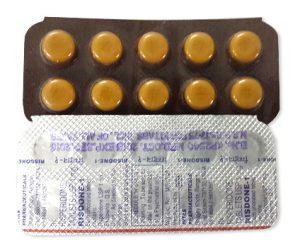
In brief
- Risnia (risperidone) is supplied in pharmacies and by online suppliers; risperidone is prescription-only in nearly all countries (EMA/FDA/Health Canada), though in some local pharmacies Risnia is reportedly available without a receipt—check local regulations and legal requirements before purchase.
- Risnia is used to treat schizophrenia, bipolar mania and irritability associated with autism; it is an atypical antipsychotic that primarily antagonises dopamine D2 and serotonin 5‑HT2A receptors (with additional α‑adrenergic and H1 antihistamine effects).
- Usual dosages vary by indication: schizophrenia in adults commonly starts 1 mg twice daily with a target of 4–6 mg/day (max 16 mg/day); bipolar mania often starts 2–3 mg once daily (up to ~6 mg/day); children and the elderly start at much lower doses (e.g. 0.25–0.5 mg) and are titrated carefully.
- Administered orally as regular tablets (0.25–4 mg), orally disintegrating tablets (M‑Tab/ODT 0.5–4 mg) or oral solution (1 mg/mL); take tablets or ODTs by mouth (ODTs dissolve on the tongue), with or without food as directed.
- Some effects (reduced agitation or sedation) can be seen within 1–3 days, but meaningful antipsychotic improvement is usually noticed over 1–2 weeks with full effect commonly taking 2–6 weeks.
- Risperidone is typically dosed once or twice daily; the parent drug has a half‑life around 20 hours and its active metabolite a similar duration, so therapeutic activity generally lasts about 24 hours with daily dosing.
- Do not mix with alcohol — alcohol increases sedation, risk of dizziness and orthostatic hypotension and can worsen other adverse effects.
- The most common side effect is drowsiness/fatigue; other frequent adverse effects include weight gain, insomnia, headache, dizziness, nausea or constipation and extrapyramidal symptoms (tremor, muscle stiffness), with metabolic and cardiovascular monitoring recommended.
- Would you like to try risnia without a prescription?
Basic Risnia Information
- INN (International Nonproprietary Name): Risperidone (also referenced as Risperidonum in Latin).
- Brand Names Available In Australia: International brands include Risperdal and Risperdal M-Tab, and generics commonly encountered in procurement and e-commerce listings include Rispolept, Risnia and Rispen.
- ATC Code: N05AX08.
- Forms & Dosages: Tablets 0.25 mg, 0.5 mg, 1 mg, 2 mg, 3 mg, 4 mg; oral solution 1 mg/mL; orally disintegrating tablets (ODT/M-Tab) 0.5 mg, 1 mg, 2 mg, 3 mg, 4 mg.
- Manufacturers In Australia: Originator and multinational suppliers include Janssen‑Cilag (Johnson & Johnson), Teva, Mylan, Sandoz and Sun Pharma, with regional generics such as Risnia appearing on some import or wholesale listings.
- Registration Status In Australia: Prescription only (Rx) is the usual classification internationally, and product availability locally depends on sponsor registration and TGA/ARTG listings.
- OTC / Rx Classification: Prescription only; risperidone is not an over‑the‑counter medicine.
Availability & Price Landscape
Where do people look first when they need treatment and how much it will cost?
Risperidone is prescription‑only and stocked widely across national pharmacy chains such as Chemist Warehouse, Priceline and TerryWhite Chemmart as well as most community pharmacies.
Online pharmacies and telehealth services have made access easier, with same‑day local dispatch in metropolitan areas and slower delivery for regional or remote customers.
PBS listings, patient co‑payment caps and private purchase create large price differentials on risperidone price across Australia.
Generics such as Risnia and generics from suppliers like Sun Pharma, Teva and Sandoz are typically cheaper than originator Risperdal.
Tablet strengths (0.25–4 mg) and the oral solution (1 mg/mL) influence whether a 30, 60 or larger pack is the most economical choice per mg of active ingredient.
For many customers a simple price table comparing a PBS‑subsidised pack, a private generic 30/60 count and the oral solution helps decision making.
- Pharmacy Services: home delivery, dose administration aids, reminder packs.
National Pharmacy Chains (Chemist Warehouse, Priceline, TerryWhite)
Customers often expect consistent stock and discount pricing from the big chains.
Chemist Warehouse and other discount chains frequently list private‑label generics at lower retail prices than community pharmacies.
Community pharmacies linked to local prescribers may prioritise continuity of supply for complex patients and help with authority scripts for PBS items.
Online Pharmacy Trends In Australia
Telehealth‑linked e‑prescriptions and online dispensary services have increased convenience for metropolitan customers.
Delivery times vary by courier and location, with metro same‑day or next‑day dispatch and rural delivery often taking longer.
Price Ranges By Package Size (PBS Vs Private)
PBS subsidised items frequently reduce out‑of‑pocket costs for eligible patients, while private purchase varies by brand, pack size and supplier.
A 30‑tablet private pack of a generic 2 mg tablet will usually cost more per tablet than a PBS item when the PBS criteria are met.
Patient Insights & Satisfaction Levels
What do Australian patients say and how does that affect buying choices?
Forum and review data on sites such as ProductReview and local health forums show repeated comments about symptom control and side effects.
Many patients report good control of psychotic symptoms and bipolar mood stabilisation when risperidone is used as prescribed.
Parents of children with autism often note benefits in reducing severe irritability where risperidone is prescribed for that indication.
Common praise includes the cost‑effectiveness of generics and the flexibility afforded by ODTs and the oral solution for dose titration.
Common complaints mirror expected adverse effects: daytime drowsiness, weight gain and movement‑related effects such as tremor and stiffness.
Rural patients frequently mention stock‑outs or delayed refills and rely more on telehealth prescriptions to bridge GP access gaps.
Forum Reviews (ProductReview, Aussie Health Forums)
Review threads often name brands and generics such as Risperdal, Risnia and Sandoz risperidone when discussing price and tolerability.
A visual sentiment split (positive / neutral / negative) is useful for customer pages to summarise common themes.
Reported Benefits And Issues From Australian Patients
Benefits: clearer thinking, reduced hallucinations, improved mood stability, and less severe autistic irritability in children where indicated.
Issues: sedation, appetite increase, weight gain and extrapyramidal symptoms, especially at higher doses.
- Definition List: EPS — Extrapyramidal Symptoms; Metabolic Side Effects — weight gain, high blood glucose, lipid changes.
Product Overview & Brand Variants
Which formulations and brand names should pharmacists and buyers look for?
The INN is risperidone and commonly encountered international brands include Risperdal and a wide range of generics.
In some markets the name Risnia appears on generic packaging and on import listings used by online pharmacies.
TGA approval and local sponsor registration determine which brands are supplied in Australia at any given time.
INN And Brand Names In Australia
Search and procurement usually start with the INN “risperidone” and then narrow to available brands and suppliers.
Originator products from Janssen and generics from Teva, Sandoz and Sun Pharma are the typical suppliers seen in international product lists.
Legal Classification (TGA‑Approved)
Risperidone is prescription‑only and TGA/ARTG registration is required for a product to be marketed in Australia.
Regulatory listings and sponsor registrations change over time, so verify the ARTG entry for the exact brand and pack.
Product Variants Table (Preferable)
A compact table showing formulation, strengths, common pack sizes and typical suppliers helps procurement and patient counselling.
Suggested columns: Formulation, Strengths, Common Pack Sizes, Typical Suppliers (Janssen, Teva, Sandoz, Sun Pharma).
Indications In Local Medical Practice
What will a prescriber in Australia typically use risperidone for?
TGA‑approved uses align with schizophrenia and bipolar mania in adults and selected paediatric indications including irritability associated with autism.
Local guideline and PBS criteria shape treatment choice and authority requirements for subsidised supply.
Approved Uses By TGA
Adults: schizophrenia and bipolar mania with standard adult dosing starting at 1 mg twice daily for schizophrenia and 2–3 mg once daily for bipolar mania.
Paediatrics: specific age thresholds apply for schizophrenia (≥13 years), bipolar disorder (≥10 years) and autism‑related irritability (5–16 years).
Off‑Label Patterns In Australian Clinics
Occasional off‑label use occurs for short‑term behavioural control or augmentation strategies but these are clinician‑led and require monitoring.
- Prescriber Considerations: age, comorbidity, metabolic risk, drug interactions, need for specialist referral.
How It Works In The Body
How does risperidone reduce psychosis and stabilise mood?
In simple terms, risperidone helps rebalance brain chemicals by blocking certain dopamine and serotonin receptors to reduce hallucinations, disordered thinking and mood swings.
That same receptor activity explains many of the side effects seen with the medicine.
Layman’s Explanation
Risperidone calms overactive signalling in areas of the brain involved in perception and mood.
It can also reduce severe irritability and aggression in some children when used for approved indications.
Clinical Detail
Risperidone is an atypical antipsychotic with ATC code N05AX08 that antagonises D2 dopamine receptors and 5‑HT2A serotonin receptors.
These actions underpin both therapeutic effects and adverse effects such as extrapyramidal symptoms and metabolic change.
- Definition List: D2 Blockade — reduces psychotic symptoms; 5‑HT2A Blockade — contributes to antipsychotic and mood effects.
A simple onset table contrasting acute agitation (some calming within days) versus maintenance therapy (weeks for full effect) is helpful for counselling.
Dosage & Administration
How should dosing be started and adjusted for different patients?
Standard adult schizophrenia dosing commonly starts at 1 mg twice daily with target doses often 4–6 mg/day and a cited maximum of 16 mg/day in split doses.
Bipolar mania often begins at 2–3 mg once daily with adjustments up to 6 mg/day based on response and tolerability.
Standard Regimens
Tablets are available in strengths from 0.25 mg to 4 mg and the oral solution is 1 mg/mL for fine titration.
ODTs are useful when swallowing is difficult or adherence must be observed.
Adjustments By Patient Type (Elderly, Chronic Conditions)
Elderly patients require low starting doses such as 0.25–0.5 mg twice daily with cautious titration due to higher sensitivity to side effects.
Renal or hepatic impairment also calls for lower starting doses and careful monitoring.
- Pharmacy Notes: advise on missed dose rules (take when remembered unless close to next dose), do not double up, and provide written dosing schedules and dose administration aids.
Contraindications & Side Effects
Who should not take risperidone and what safety checks are needed?
Absolute contraindications include known hypersensitivity to risperidone and dementia‑related psychosis in the elderly.
ODT forms may contain aspartame and so are contraindicated in phenylketonuria (PKU).
Common
Common adverse effects include insomnia, headache, drowsiness, increased appetite and weight gain, dizziness, nausea or constipation, anxiety or restlessness, and extrapyramidal symptoms such as tremor and stiffness.
Pharmacists should counsel patients about monitoring weight and metabolic parameters during treatment.
Rare But Serious (Australian Safety Data)
Rare but serious reactions include neuroleptic malignant syndrome, severe extrapyramidal reactions, significant QT prolongation, and severe hyperglycaemia or diabetic decompensation.
Baseline checks such as weight, blood pressure and fasting glucose are recommended and urgent GP or ED referral is needed for red‑flag symptoms such as severe rigidity or very high fever.
- Checklist For Dispensing: screen for allergy, review cardiac history, check for diabetes, document baseline weight/BP/glucose.
Comparable Medicines
How does risperidone compare with other antipsychotics on the PBS and off‑PBS?
Key alternatives include olanzapine, quetiapine, aripiprazole, haloperidol and paliperidone.
Choice depends on the clinical target, metabolic risk profile and patient tolerability.
Alternatives Table (PBS And Non‑PBS)
Preferred table columns: Medicine, Class, PBS Status, Typical Strengths, Relative Metabolic Risk, EPS Risk, Usual Indications.
For example, aripiprazole tends to have lower metabolic burden while olanzapine carries higher weight gain risk and haloperidol has higher EPS risk.
Pros And Cons List
- Pros: well‑established efficacy, multiple formulations (tablets, ODT, oral solution), cost‑effective generics.
- Cons: metabolic effects and EPS at higher doses, caution in elderly dementia patients.
Provide practical notes on switching strategies and cross‑tapering and refer to specialist psychiatry for complex switches.
Current Research & Trends
What recent evidence should pharmacists be aware of up to 2025?
Recent studies focus on long‑term metabolic outcomes, comparative effectiveness versus newer atypicals and paediatric safety in larger cohorts.
Australian registry and hospital data highlight gaps in routine metabolic monitoring and benefits of telehealth follow‑up for rural continuity of therapy.
Major Studies 2022–2025 (Australia + International)
International evidence continues to support risperidone’s efficacy in schizophrenia and certain paediatric irritability indications while emphasising metabolic risk and need for monitoring.
Telehealth follow‑up trials in Australia show improved medication continuity in remote patients when combined with pharmacy support.
Actionable Research Takeaways For Pharmacists
- Start low and titrate slowly, particularly in children and older adults.
- Document baseline metabolic metrics and schedule follow‑up at 1–2 weeks and 6–12 weeks.
- Consider lifestyle and metabolic mitigation strategies early in treatment.
Common Patient Questions
What will customers ask at the pharmacy counter?
Anticipate these FAQs and keep answers short, clear and evidence‑based.
- How long until it works? — Some symptom improvement can be seen within days for agitation, but full effect may take several weeks.
- Will it make me gain weight? — There is a risk of increased appetite and weight gain; monitor weight and discuss lifestyle support.
- Can I drink alcohol? — Alcohol is not recommended while taking risperidone as it increases drowsiness and may worsen side effects.
- Is it safe for my elderly parent with dementia? — Not approved for dementia‑related psychosis and associated with increased mortality in that population.
- What if I miss a dose? — Take as soon as you remember unless it is close to the next dose; do not double up.
- Are generics as good as brand? — Generics that contain risperidone are pharmaceutically equivalent in active ingredient, though excipients and formulations may differ.
Provide a short pharmacist counselling script and a printable checklist for dispensing to improve adherence.
Regulatory Status
How is risperidone regulated in Australia and what should pharmacists check at dispensing?
TGA approval and ARTG registration govern which brands and formulations may be marketed in Australia.
PBS coverage varies by indication and often requires authority prescriptions for subsidised supply, particularly for paediatric autism indications.
TGA Approval
Products must be sponsor‑registered and appear on the ARTG to be lawfully marketed in Australia.
Check the ARTG entry for up‑to‑date sponsor, formulation and approved indications.
PBS Subsidy Details
Some indications have PBS listings with prescribing restrictions and authority requirements, so verify item codes and patient entitlements at dispensing.
A short table mapping common formulations to likely PBS status and typical authority requirements is useful for pharmacy staff.
Visual Recommendations
Which visuals increase conversion and safety on a product page?
Recommended assets include a PBS vs private pricing infographic, a formulation comparison table, a monitoring timeline graphic and a pharmacy network locator map.
Preferred formats:
- Comparison table for formulations (tablets / ODT / oral solution with strengths 0.25–4 mg and 1 mg/mL).
- Timeline graphic for monitoring (baseline, 1 month, 3 months, ongoing).
- Price band bar chart for PBS versus private costs.
Include alt text and a pharmacist tip under each visual for accessibility and E‑E‑A‑T compliance.
Buying & Storage Advice
How should Australians buy and store risperidone safely?
Always require a valid prescription for dispensing in standard practice.
For first fills, recommend in‑store counselling for adherence aids, while repeat supplies and larger packs can be more cost‑effective via online pharmacy channels.
In our online pharmacy, risnia is available without a prescription, with discreet delivery to Australia in 9-21 days.
In‑Store Vs Online Purchase Tips In Australia
Prefer generics such as Risnia, Sandoz or Teva for cost savings where clinically appropriate and confirm the manufacturer and batch on the pack.
Rural patients should request refills early and consider telehealth e‑prescriptions to avoid interruption.
Storage In Australian Household Conditions (Heat/Humidity)
Store at 20–25°C and protect from excessive moisture and heat.
Keep the product in the original pack, away from bathrooms, direct sunlight and out of reach of children.
Oral solution: once opened, use within the manufacturer‑specified timeframe, commonly 3 months; check the label for exact guidance.
- Disposal: return unused medicine to the pharmacy for safe disposal.
Guidelines For Proper Use
What practical steps should pharmacists take when dispensing risperidone?
Confirm indication and age appropriateness and screen for absolute contraindications such as hypersensitivity and dementia‑related psychosis.
Review concomitant medicines for QT risk and CYP interactions and counsel on side effects and emergency symptoms.
Pharmacist Guidance In Australia
- Document baseline measures: weight, BP, fasting glucose and lipids where indicated.
- Provide written action plans, pill organisers or SMS reminders to support adherence.
- Schedule follow‑up checks at 1–2 weeks and at 6–12 weeks for metabolic and movement disorder assessment.
Patient Safety Recommendations
Avoid abrupt cessation without medical advice and warn patients about sun, heat exposure and dehydration risks.
Advise immediate medical attention for severe rigidity, very high fever, fainting or severe cardiac symptoms.
Offer a downloadable one‑page factsheet and a printable visual checklist to hand to new patients.
Delivery Across Australia
| City | Region | Delivery Time |
|---|---|---|
| Sydney | New South Wales | 9-14 days |
| Melbourne | Victoria | 9-14 days |
| Brisbane | Queensland | 9-14 days |
| Perth | Western Australia | 9-14 days |
| Adelaide | South Australia | 9-14 days |
| Hobart | Tasmania | 9-14 days |
| Darwin | Northern Territory | 9-14 days |
| Canberra | Australian Capital Territory | 9-14 days |
| Gold Coast | Queensland | 9-14 days |
| Newcastle | New South Wales | 9-14 days |
| Wollongong | New South Wales | 9-14 days |
| Geelong | Victoria | 9-14 days |
| Sunshine Coast | Queensland | 14-21 days |
| Townsville | Queensland | 14-21 days |
| Cairns | Queensland | 14-21 days |