Irbesartan
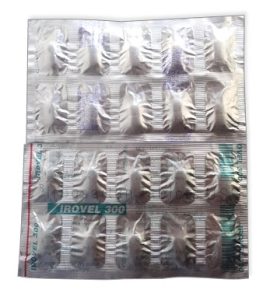
In brief
- In our pharmacy, you can buy irbesartan without a prescription, with delivery across Australia in 9–21 days and discreet, anonymous packaging.
- Irbesartan is used to treat hypertension and to slow progression of diabetic nephropathy; it is an angiotensin II receptor blocker (selective AT1 receptor antagonist) that reduces vasoconstriction and aldosterone-mediated sodium retention.
- The usual adult dose for hypertension is 150 mg once daily (150–300 mg once daily is common); treatment may be started at 75 mg in volume‑depleted patients and titrated to a maximum of 300 mg once daily; similar dosing applies for diabetic nephropathy.
- Oral tablets; also available in fixed‑dose combinations with hydrochlorothiazide (for example 150/12.5 mg or 300/25 mg).
- Blood‑pressure lowering effects usually begin within 1–2 hours after a dose, with antihypertensive effect evident within the first day and greater effect over days to weeks.
- Duration of action is approximately 24 hours, permitting once‑daily dosing.
- Avoid excessive alcohol while taking irbesartan as alcohol can increase dizziness and the risk of low blood pressure; take care when standing and avoid heavy drinking.
- The most common side effect is dizziness.
- Would you like to try irbesartan without a prescription?
Availability & Price Landscape
Basic Irbesartan Information
- INN (International Nonproprietary Name): Irbesartan
- Brand Names Available In Australia: Avapro, Karvea, Karvezide (with HCTZ), Irbesartan Teva, Irbesartan Zentiva, Irbesartan Sandoz, plus occasional wholesaler-supplied brands
- ATC Code: C09CA04
- Forms & Dosages: Tablets 75 mg, 150 mg, 300 mg; fixed-dose combos with hydrochlorothiazide (example 150 mg/12.5 mg; 300 mg/25 mg)
- Manufacturers In Australia: Global manufacturers noted in registrations include Sanofi, Teva, Zentiva and Sandoz (local sponsors/importers vary)
- Registration Status In Australia: TGA approved (product entries subject to sponsor registration and labelling)
- OTC / Rx Classification: Prescription-only (Rx)
Where can I buy irbesartan and how much will it cost in Australia?
Irbesartan is stocked by major national pharmacy chains and by online pharmacies that accept e-prescriptions.
Chemist Warehouse and Priceline commonly list competitive private prices for branded Avapro and generics such as Irbesartan Teva and Irbesartan Sandoz.
TerryWhite Chemmart generally offers pharmacist consultation and scripts-for-collection with a focus on continuity of care.
Price-sensitive customers in Australia routinely choose generics like Irbesartan Teva or Irbesartan Sandoz to reduce out-of-pocket costs.
Some branded combo products (for example Karvezide-equivalents or Coaprovel-style preparations) are less commonly stocked in community stores.
Telehealth and e-prescription growth means reputable online pharmacies supply TGA-approved brands but require a valid prescription.
Private prices vary by strength and pack size (14/28/30 tablets are common blister strip packings), and PBS coverage is not identical for every brand or fixed-dose combination.
For a quick comparison, check chain websites for irbesartan 150mg and irbesartan 300mg private prices before you commit to a purchase.
Patient Insights & Satisfaction Levels
What do Australians say about taking irbesartan?
Many patients report good blood-pressure control with irbesartan and relatively few side effects compared with some ACE inhibitors.
Forum discussions on ProductReview and local health forums commonly mention improved readings and transient dizziness when starting therapy.
Price remains a recurring theme, with patients preferring generics such as Irbesartan Sandoz or Irbesartan Teva to lower weekly costs.
Those with diabetic kidney disease often report stabilisation on standard doses of 150–300 mg, matching the usual practice for nephropathy management.
Some patients note first-dose light-headedness, especially if already taking diuretics or after fasting, and rural customers report occasional stock delays at smaller pharmacies.
Community pharmacy advice is valued, with many patients preferring a quick pharmacist chat at TerryWhite or an online pharmacist chat for reassurance when switching brands.
Short Pros/Cons From Real User Feedback:
- Pros: Once-daily dosing, good tolerability, effective BP reduction, helpful for diabetic nephropathy.
- Cons: Initial dizziness, possible fatigue/nausea, supply variation between branded Avapro and generics, cost concerns.
Definitions For Common Terms:
- First-Dose Effect: A drop in blood pressure that can happen after the initial tablet in volume-depleted patients.
- Tolerability: How well patients tolerate a medicine without stopping due to side effects.
Product Overview & Brand Variants
Which branded and generic forms of irbesartan are available in Australia?
Irbesartan is the INN used worldwide and the Australian market includes branded Avapro and generics such as Irbesartan Teva, Irbesartan Zentiva and Irbesartan Sandoz.
Karvea and Karvezide appear intermittently via wholesalers and may be available for prescribers to request from some suppliers.
Tablets are commonly supplied in 75 mg, 150 mg and 300 mg strengths, and fixed-dose combinations with hydrochlorothiazide (150/12.5 mg, 300/25 mg) are available internationally and sometimes locally.
The ATC classification is C09CA04 which places irbesartan in the angiotensin II receptor blocker group.
Products are usually packaged in blister strips of 14, 28 or 30 tablets, so confirm pack size when comparing private prices.
| Brand | Supplier/Manufacturer | Common Pack Sizes |
|---|---|---|
| Avapro | Sanofi | 14, 28, 30 |
| Irbesartan Teva | Teva | 14, 28, 30 |
| Irbesartan Sandoz | Sandoz | 14, 28, 30 |
Practical Note: Always check the exact generic supplier printed on the box to confirm price and interchangeability at dispensing.
Indications In Local Medical Practice
When do Australian prescribers choose irbesartan?
Irbesartan is primarily used for the treatment of hypertension in adults with standard starting practice typically at 150 mg once daily.
It is also indicated for diabetic nephropathy to reduce progression of renal disease in type 2 diabetes with proteinuria, often using 150–300 mg daily.
Clinicians may start frail or volume-depleted patients at 75 mg to reduce first-dose hypotension risk.
Off-label patterns include using irbesartan as an alternative for patients intolerant of ACE inhibitors due to cough, and swapping between ARBs for resistant hypertension.
Use in heart failure is cautious and usually part of combination therapy rather than first-line monotherapy; renal function and potassium are monitored closely after initiation or dose changes.
| Indication | Typical Starting Dose | Typical Target/Max Dose |
|---|---|---|
| Hypertension (Adults) | 150 mg once daily | 300 mg once daily |
| Diabetic Nephropathy | 150 mg once daily | 300 mg once daily |
How It Works In The Body
How does irbesartan lower blood pressure and protect the kidneys?
Irbesartan blocks angiotensin II at the AT1 receptor, preventing vasoconstriction and reducing aldosterone-driven salt retention.
This action causes blood vessels to dilate, lowers systemic vascular resistance and reduces pressure on the heart and kidneys.
Because irbesartan does not increase bradykinin, patients have a lower risk of cough than with ACE inhibitors.
Pharmacokinetic highlights: oral tablets in 75/150/300 mg strengths are designed for once-daily dosing, and monitoring is needed for interactions that raise potassium or affect renal function.
Clinical Mechanism In Brief: selective AT1 receptor antagonist (ARB class) leading to reduced peripheral resistance and decreased aldosterone secretion.
| Parameter | Key Point |
|---|---|
| Class | ARB (ATC C09CA04) |
| Dosing Frequency | Once daily |
Dosage & Administration
What dose should a patient start on, and how is irbesartan adjusted?
Adult hypertension usually starts at 150 mg once daily, with titration to 300 mg if required for blood-pressure control.
Volume-depleted or frail patients may start at 75 mg and increase as tolerated.
For diabetic nephropathy, clinicians commonly use 150 mg and titrate up to 300 mg based on response and tolerability.
Tablets are available as 75 mg, 150 mg and 300 mg, and fixed-dose ARB/HCTZ combos (for example 150/12.5 mg or 300/25 mg) are used where combination therapy is desired.
Elderly patients do not routinely need dose adjustments unless renal or hepatic impairment exists.
Renal impairment guidance: no dose change for mild–moderate impairment; use with caution when CrCl drops below 20 ml/min due to limited data.
Monitor serum creatinine and potassium within 1–2 weeks of initiation or dose escalation to detect renal function decline or hyperkalemia early.
Contraindications & Side Effects
What should patients watch for while taking irbesartan?
Common mild side effects include dizziness, fatigue, nausea, back pain and upper respiratory symptoms.
First-dose hypotension can occur in volume-depleted patients or among those on diuretics and should be monitored for, especially in older adults.
Serious but less common risks include hyperkalemia, significant renal function worsening and symptomatic hypotension.
Angioedema is rare but requires immediate medical attention if facial or airway swelling occurs.
Absolute contraindications include pregnancy (fetotoxic/teratogenic risk in the second and third trimesters), hypersensitivity to irbesartan, severe hepatic impairment and concurrent use of aliskiren in diabetic patients.
| Contraindication | Recommended Action |
|---|---|
| Pregnancy (2nd/3rd trimester) | Stop and seek medical advice; switch therapy prior to conception where appropriate |
| Severe Hepatic Impairment | Do not use |
| Hypersensitivity | Do not use |
Monitoring Checklist: check BP, serum potassium and creatinine at baseline and 1–2 weeks after starting or changing dose.
Comparable Medicines
What are the main alternatives to irbesartan and how do they compare?
Alternatives include other ARBs such as losartan, valsartan, candesartan, telmisartan and olmesartan, plus ACE inhibitors like ramipril and enalapril.
On the PBS, listing and subsidy levels vary by molecule and formulation, so out-of-pocket costs differ between ARBs and ACE inhibitors.
Irbesartan advantages include once-daily dosing and a strong evidence base for diabetic nephropathy, which can guide prescribers to choose it over some alternatives.
Cons of the ARB class are shared risks such as hyperkalemia and renal function decline, and they are contraindicated in pregnancy.
| Medicine | Common Strengths | PBS Status (General) |
|---|---|---|
| Irbesartan (Avapro/generics) | 75/150/300 mg | Varies by formulation and indication |
| Losartan | 25/50/100 mg | Listed for several indications |
| Valsartan | 40/80/160/320 mg | Listed for some indications |
For combination therapy, ARB/HCTZ products add convenience but may complicate titration of individual components.
Current Research & Trends
What recent evidence should pharmacists and prescribers be aware of?
Recent meta-analyses from 2022–2024 support a class effect among ARBs for blood-pressure lowering, while historical irbesartan trials underpin its nephropathy indication.
Australian observational studies are using real-world data to monitor safety signals such as hyperkalemia and renal outcomes in older, polypharmacy patients.
Emerging research highlights switching outcomes between branded Avapro and generics like Irbesartan Sandoz or Irbesartan Teva, with an emphasis on maintaining adherence during switches.
Practically, pharmacists should counsel patients on monitoring potassium and renal function, and report adverse events to the TGA when needed.
Watch for new generic entrants and supply changes from manufacturers such as Teva or Sandoz, which can influence private prices and availability in community pharmacies.
Providers are encouraged to involve patients in shared decision-making about changing medicines, especially for women of childbearing potential because of teratogenic risk.
Common Patient Questions
What are the questions patients bring to the pharmacy about irbesartan?
Can I buy irbesartan without a script? No, irbesartan is prescription-only under TGA rules and requires a valid prescription to dispense.
What should I do if I miss a dose? Take it as soon as remembered if only a few hours have passed, skip it if close to the next dose and do not double up.
Is irbesartan safe in pregnancy? No, it is contraindicated in the second and third trimesters and alternatives should be used for pregnant patients.
Quick Pharmacist Counselling Scripts:
- “We’ll check baseline renal function and potassium before you start and again in 1–2 weeks.”
- “If you feel dizzy on standing, sit and measure your BP; call us or your GP if symptoms are severe.”
- “Tell us about all other medicines that raise potassium (e.g., potassium-sparing diuretics or ACE inhibitors).”
For cost concerns, suggest generic alternatives and check PBS entitlements, and for rural patients discuss mail-order options and confirm likely delivery times.
Regulatory Status
What is the regulatory position for irbesartan in Australia?
Irbesartan is TGA-approved and classified as a prescription-only medicine, consistent with approvals by other regulators such as the FDA and EMA.
The ATC code is C09CA04 which places it among the angiotensin II receptor blockers.
PBS listing varies by formulation and indication; some ARB products are subsidised for specific conditions like hypertension or diabetic nephropathy, while other brands or fixed-dose combos may not be on the PBS.
Pharmacies must check the current PBS schedule and item numbers to confirm subsidy eligibility and concessional pricing for patients.
If a product is not on the PBS, patients will pay a private price and may benefit from switching to a registered generic where available.
Visual Recommendations
How can visuals improve patient understanding and increase conversion on product pages?
Infographics illustrating the RAAS pathway and where irbesartan blocks AT1 receptors help patients see how the medicine works.
A clear table showing pack options (Avapro and generics) by strength and common pack sizes assists price comparison for irbesartan 75mg, irbesartan 150mg and irbesartan 300mg.
A pricing bar comparing private vs PBS indicative ranges across Chemist Warehouse, Priceline and TerryWhite helps users choose quickly.
Include a monitoring timeline visual with baseline tests, follow-up at 1–2 weeks, then at 3 months and routine reviews to encourage safe use.
On product pages add a visible TGA/Rx badge, downloadable SPC PDF and a generic-alternatives dropdown with an “Ask a Pharmacist” telehealth CTA for questions about irbesartan brands Australia.
Buying & Storage Advice
Where should Australians buy irbesartan and how should they store it at home?
Prefer registered Australian pharmacies and pharmacies that confirm TGA-approved sponsors when ordering online, and always supply a valid prescription where required.
For cost savings ask the pharmacist about generics such as Irbesartan Teva or Irbesartan Sandoz before dispensing.
In our online pharmacy, irbesartan is available without a prescription, with discreet delivery to Australia in 9-21 days.
Store tablets in the original packaging below 25°C, away from moisture and direct sunlight, and do not refrigerate.
Australian summers can be hot; avoid storing medicines in bathrooms or cars where heat and humidity are high.
When travelling, keep irbesartan in carry-on luggage in a shaded place and bring a copy of the prescription for customs or emergency care needs.
Dispose of expired tablets via pharmacy take-back services rather than household rubbish.
Guidelines For Proper Use
What should pharmacists communicate to keep patients safe on irbesartan?
Confirm the indication and usual starting dose—commonly 150 mg for adults—and counsel about possible dizziness on initiation and the first-dose hypotension risk.
Advise women of childbearing potential about contraindication in pregnancy and discuss effective contraception as needed.
Review other medicines that increase potassium and recommend baseline and follow-up monitoring of serum creatinine and potassium at 1–2 weeks after starting or changing dose.
Encourage home blood-pressure monitoring and to report symptoms such as marked light-headedness or reduced urine output promptly.
Offer adherence aids such as dose administration aids, blister packs or SMS reminders and schedule pharmacist follow-up, especially for elderly or rural patients.
If severe side effects like angioedema or collapse occur, advise immediate emergency care and cease the medicine until reviewed by a prescriber.
Delivery Across Australia
| City | Region | Delivery Time |
|---|---|---|
| Sydney | New South Wales | 9-14 days |
| Melbourne | Victoria | 9-14 days |
| Brisbane | Queensland | 9-14 days |
| Perth | Western Australia | 9-14 days |
| Adelaide | South Australia | 9-14 days |
| Canberra | Australian Capital Territory | 9-14 days |
| Hobart | Tasmania | 9-14 days |
| Darwin | Northern Territory | 9-14 days |
| Gold Coast | Queensland | 9-14 days |
| Newcastle | New South Wales | 9-14 days |
| Wollongong | New South Wales | 9-14 days |
| Geelong | Victoria | 9-14 days |
| Townsville | Queensland | 14-21 days |
| Cairns | Queensland | 14-21 days |