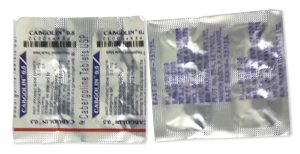
Dostinex
In brief
- In our pharmacy in Australia, you can buy dostinex without a prescription, with delivery in 9–21 days throughout Australia and discreet, anonymous packaging; note that cabergoline is generally classified as prescription-only in most countries, so check local regulations if required.
- Dostinex (cabergoline) is used to treat hyperprolactinemia, prolactin-secreting pituitary adenomas and related menstrual/fertility disorders; it is a dopamine D2 receptor agonist that suppresses prolactin secretion from the pituitary.
- The usual starting dose is 0.5 mg per week (given as a single dose or divided); maintenance is titrated by about 0.5 mg/week as needed, commonly up to 1 mg twice weekly (typical maximum ~2 mg/week, occasionally higher under specialist supervision).
- Administration is oral tablets (commonly 0.5 mg tablets; some generics available as 0.25 mg or 1 mg), taken by mouth as instructed by the prescriber or pharmacist.
- Cabergoline reduces prolactin levels rapidly—prolactin start to fall within about 48–72 hours, though clinical and symptomatic improvement may take several weeks.
- The drug has a long duration of action (long half-life, often around 60–70 hours), allowing once- or twice-weekly dosing and sustained prolactin suppression for about a week after a dose.
- Avoid or limit alcohol while taking dostinex, as alcohol can worsen drowsiness, dizziness and orthostatic hypotension and increase other side effects.
- The most common side effect is nausea; other frequent effects include dizziness, headache, constipation, fatigue and orthostatic hypotension (rarely psychiatric effects such as hallucinations or impulse-control disorders).
- Would you like to try dostinex without a prescription?
Basic Dostinex Information
- INN (International Nonproprietary Name): Cabergoline.
- Brand Names Available In Australia: Dostinex is the original Pfizer brand commonly supplied internationally and generics labelled “cabergoline” are widely available; Cabaser and other international brands exist but local packaging and availability should be confirmed with your pharmacy.
- ATC Code: G02CB03.
- Forms & Dosages: Tablet (oral) 0.5 mg is the usual strength, commonly supplied in bottles or blister packs of 2, 8 or 30 tablets; rare formulations of 0.25 mg or 1 mg appear in some regions.
- Manufacturers In Australia: Pfizer is the original developer of Dostinex and numerous generic manufacturers supply cabergoline globally; local suppliers should be confirmed via national registries or your pharmacist.
- Registration Status In Australia: Not specified in the provided product data—check the Therapeutic Goods Administration (TGA) and the Australian Register of Therapeutic Goods (ARTG) for current registrations.
- OTC / Rx Classification: Prescription Only Medicine (Rx) in all markets referenced.
Availability & Price Landscape
Where can you usually find cabergoline in Australia?
Major national pharmacy chains such as Chemist Warehouse, Priceline and TerryWhite Chemmart supply cabergoline on presentation of a valid prescription.
Dostinex is known internationally as the 0.5 mg tablet, and generics labelled “cabergoline” are widely available locally and overseas.
What to bring when you go to the pharmacy.
- Prescription from your GP or specialist.
- A current medication list including supplements.
- Medicare card or other ID for concession checks.
Telehealth and e-prescriptions are now common, and legitimate online pharmacies will request an e-prescription and show TGA-registered supplier details.
Price-sensitive Australians compare discount sites, but watch for shipping fees and supply timelines.
Cabergoline does not need cold-chain transport, so shipping is straightforward compared with some medicines.
Check PBS for subsidy eligibility before purchase.
| Pack Size | Chemist Warehouse | Priceline | TerryWhite | PBS |
|---|---|---|---|---|
| 2 Tablets (0.5 mg) | Varies by generic; ask in store. | Varies by supplier; ask in store. | Varies by supplier; ask in store. | Check TGA/PBS for subsidy details. |
| 8 Tablets (0.5 mg) | Varies by generic; ask in store. | Varies by supplier; ask in store. | Varies by supplier; ask in store. | Check TGA/PBS for subsidy details. |
| 30 Tablets (0.5 mg) | Varies by generic; ask in store. | Varies by supplier; ask in store. | Varies by supplier; ask in store. | Check TGA/PBS for subsidy details. |
Patient Insights & Satisfaction Levels
What do Australian patients say about cabergoline?
Forum reviews on ProductReview and Aussie health forums often highlight effective prolactin reduction and symptom relief.
Many report return of regular periods and improved fertility within weeks of starting cabergoline.
Common complaints focus on initiation side effects such as nausea and dizziness, and annoyance at sourcing specific brands or generics.
Here are anonymised patient-style quote callouts.
- “My prolactin normalised within weeks and my periods returned.” — anonymous forum user.
- “Started on 0.5 mg weekly; felt nauseous the first few days but better after dose split.” — anonymous forum user.
Pros and cons seen in reviews.
- Pros: Effective at lowering prolactin, weekly dosing convenient, tumour shrinkage reported anecdotally.
- Cons: Early nausea, orthostatic dizziness, and occasional difficulty getting a preferred brand in rural areas.
Rural patients often report delays obtaining specialist scripts, which telehealth and pharmacist dose-splitting services can ease.
Practical tip from community feedback: ask for blister packs if on a weekly regimen and keep a symptom diary to discuss at follow-up.
Product Overview & Brand Variants
What names will you see on the shelf?
The International Nonproprietary Name is cabergoline and the original brand is Dostinex, usually supplied as 0.5 mg tablets.
Generics labelled “cabergoline” are widely available and may appear in local packaging.
Cabaser is an alternative brand noted in some European markets, typically at higher doses for Parkinson’s disease.
Legal classification and quick definitions.
- INN: Cabergoline.
- Brand: Dostinex (Pfizer) and multiple generics.
- ATC Code: G02CB03.
- Rx Status: Prescription Only Medicine.
Always check pack strength and count before accepting supply, and review excipients if you have known allergies.
Ask your pharmacist to confirm whether a specific brand is TGA-registered if that is important to you.
Indications In Local Medical Practice
What is cabergoline commonly used for in Australia?
Cabergoline is primarily used for hyperprolactinaemia and prolactin-secreting pituitary adenomas (prolactinomas).
Clinicians in Australia follow these indications and will confirm TGA-labelled product information when prescribing.
Off-label uses occur under specialist supervision and include Parkinson’s disease at higher doses and some reproductive indications.
Lactation suppression postpartum is generally not recommended due to safety concerns.
| Use | On/Off-Label | Typical Prescriber | Monitoring |
|---|---|---|---|
| Hyperprolactinaemia | On-Label | GP/Endocrinologist | Prolactin levels; clinical review |
| Prolactinoma | On-Label | Endocrinologist | Prolactin, MRI as needed |
| Parkinson’s Disease | Off-Label (specialist) | Neurologist | Cardiac review; dose monitoring |
Choice between cabergoline and alternatives depends on tolerance, dosing convenience and specialist advice.
How It Works In The Body
Why does cabergoline lower prolactin?
Cabergoline is a dopamine receptor agonist that acts on the pituitary gland to suppress prolactin secretion.
By stimulating D2 receptors on lactotroph cells, cabergoline reduces the signal that drives prolactin production.
Lower prolactin leads to reduced galactorrhoea, improved menstrual regularity and potential shrinkage of prolactinomas over time.
Clinical detail for prescribers.
Cabergoline has high affinity for D2 receptors and produces sustained suppression, allowing once-weekly or twice-weekly dosing in many regimens.
Onset of biochemical effect is typically within days to weeks, while tumour shrinkage may take longer.
Because cabergoline is an ergot-derived medicine, record cardiac history and monitor where cumulative exposure is high due to reported valvular risks.
Dosage & Administration
How is cabergoline usually dosed?
Standard adult starting dose for hyperprolactinaemia is 0.5 mg per week, given as a single dose or divided across the week.
Titration commonly proceeds by 0.5 mg per week increments based on prolactin response and tolerance.
Usual maintenance may reach up to 1 mg twice weekly in some cases, with a commonly cited upper limit around 2 mg per week for hyperprolactinaemia.
Rare cases may require higher doses up to 4.5 mg per week under specialist care.
Special populations and missed-dose advice.
Use in children is not established and is not recommended based on available data.
Elderly patients do not routinely require dose reduction but should be monitored for adverse effects such as dizziness or hypotension.
For liver impairment start lower and monitor closely; renal impairment requires monitoring but no standard adjustment is specified.
If you miss a dose, take it when you remember unless it is close to the next scheduled dose—do not double up.
Contraindications & Side Effects
Who should not take cabergoline?
Absolute contraindications include uncontrolled hypertension, known hypersensitivity to cabergoline or ergot derivatives, history of cardiac valve disorders and certain peripartum histories such as pre-eclampsia.
Relative contraindications requiring monitoring include cardiac, hepatic or renal dysfunction and histories of severe psychiatric disorders.
Common side effects are usually mild-to-moderate and often settle with continued treatment or dose adjustment.
- Nausea and constipation.
- Headache and dizziness.
- Fatigue, abdominal discomfort and dyspepsia.
- Orthostatic hypotension and peripheral oedema.
Rare but serious effects reported in safety data include cardiac valvulopathy, severe psychiatric reactions such as hallucinations and impulse control disorders, and severe hypotension.
Record baseline cardiac history and consider echocardiography where high cumulative doses are anticipated.
Seek urgent review for syncope, new severe psychiatric symptoms or signs suggestive of cardiac problems.
Comparable Medicines
What are the alternatives to cabergoline?
Bromocriptine is the older dopamine agonist alternative and usually requires daily dosing.
Quinagolide is another option available in some markets and is a non-ergot dopamine agonist.
| Medicine | Dosing Frequency | PBS Subsidy | Pros | Cons |
|---|---|---|---|---|
| Cabergoline | Once-weekly or twice-weekly possible | Check PBS | Good suppression, convenient dosing | Ergot derivative; valvular risk at high cumulative doses |
| Bromocriptine | Daily | Check PBS | Long safety record | More GI side effects; less convenient dosing |
| Quinagolide | Daily | Check PBS | Non-ergot option in some regions | Availability varies by market |
Choice depends on comorbidity, fertility plans, cost and PBS status.
Current Research & Trends
What are researchers looking at now?
Recent studies from 2022–2025 continue to confirm cabergoline’s efficacy for prolactin reduction and tumour shrinkage in prolactinomas.
Research attention focuses on long-term safety, particularly cardiac valvulopathy surveillance, and optimal discontinuation strategies after sustained remission.
Australian centres contribute registry data on routine practice outcomes and tolerability.
Emerging trends include wider telehealth monitoring, increased generic use lowering acquisition cost, and refined stopping criteria after sustained normal prolactin.
Population-level research is also evaluating impulse control disorders and psychiatric adverse events associated with dopamine agonists.
Clinicians and pharmacists should watch TGA safety communications and international guidance for updates.
Common Patient Questions
Here are FAQs seen in Australian pharmacy consultations.
Q: Is cabergoline on the PBS?
A: PBS listings vary by indication and sponsor—ask your pharmacist to check current subsidy status for your condition.
Q: How soon will I notice effects?
A: Biochemical reductions in prolactin often start within days to weeks, with symptomatic improvements taking a few weeks.
Q: Can I drive on cabergoline?
A: Dizziness and orthostatic hypotension can occur—avoid driving until you know how you tolerate it.
Q: What about pregnancy and breastfeeding?
A: Pregnancy requires specialist discussion; lactation suppression is generally not recommended due to safety concerns.
Q: How should I store it?
A: Store at 20–25°C, protect from moisture and light, and keep in the original pack.
Regulatory Status
How is cabergoline regulated for Australian practice?
Cabergoline is a prescription-only medicine internationally, and Australian clinicians should confirm product registration via the TGA and ARTG.
Product registrations in the US, EU and other jurisdictions are noted in the product data, but local ARTG listing determines presentation and sponsor in Australia.
PBS subsidy varies by indication and sponsor.
Pharmacists can verify ARTG numbers and PBS item numbers at the point of supply to confirm registration and subsidy eligibility.
Practical steps to check subsidy include requesting the ARTG number from the supplier and confirming any PBS authority requirements with the prescriber.
Visual Recommendations
Which visuals help patients and convert visitors to customers?
Use a pricing grid that compares pack sizes, retailers and PBS status to aid decision-making when shopping for dostinex or generic cabergoline.
Create a dosing timeline graphic showing starting dose, titration steps and maintenance ceiling to make regimens clear.
Include a side-effect frequency pictogram so patients can quickly see common versus rare effects.
Add an access map to illustrate urban versus rural supply considerations and telehealth options across Australia.
For trust signals use Australian icons such as a TGA badge and a Medicare card icon near the pharmacist contact CTA and “bring your script” reminder.
Buying & Storage Advice
Should you buy in-store or online?
In-store purchases let you show your prescription, get immediate counselling and discuss brand versus generic options.
For online orders verify the supplier is TGA-registered and that a valid prescription is required before supply.
Rural patients may prefer local pharmacy hold or delivery and can request a longer supply to reduce travel.
Note: In our online pharmacy, dostinex is available without a prescription, with discreet delivery to Australia in 9-21 days.
Storage in Australian homes during hot, humid summers deserves special attention.
Store cabergoline between 20–25°C and protect it from moisture and light.
Avoid leaving tablets in cars or bathrooms where heat and humidity are high.
For weekly regimens keep tablets in original blister packs and note the expiry date once a bottle is opened.
Consider pharmacist blistering or dose packs for accuracy if taking divided doses.
Guidelines For Proper Use
What should pharmacists check at supply?
Confirm the indication and record baseline cardiac history before dispensing cabergoline.
Review current medicines for interactions and confirm pregnancy and breastfeeding status.
Counsel on the usual starting dose of 0.5 mg per week and explain the titration plan and common side effects.
Advise simple measures to manage nausea, such as taking tablets with food and discussing antiemetic options with the prescriber if needed.
Advise orthostatic precautions and recommend avoiding driving until tolerance is established.
Recommend a symptom and side-effect diary and arrange periodic prolactin monitoring with the prescriber.
For long-term or high cumulative doses discuss cardiology review and echocardiography per specialist advice.
For missed doses advise to take as soon as remembered unless it is near the next dose and never to double doses.
In case of suspected overdose seek immediate medical attention.
Delivery Across Australia
| City | Region | Delivery Time |
|---|---|---|
| Sydney | New South Wales | 9-14 days |
| Melbourne | Victoria | 9-14 days |
| Brisbane | Queensland | 9-14 days |
| Perth | Western Australia | 9-14 days |
| Adelaide | South Australia | 9-14 days |
| Canberra | Australian Capital Territory | 9-14 days |
| Hobart | Tasmania | 9-14 days |
| Darwin | Northern Territory | 9-14 days |
| Gold Coast | Queensland | 9-14 days |
| Newcastle | New South Wales | 14-21 days |
| Wollongong | New South Wales | 14-21 days |
| Geelong | Victoria | 14-21 days |
| Sunshine Coast | Queensland | 14-21 days |
Pharmacist Contact
Bring your script, Medicare card and a current medicines list when you next visit.
Ask a pharmacist to check PBS and ARTG details if you need subsidy confirmation or specific brand registration information.
For urgent clinical questions consult your prescriber or local emergency services.
For non-urgent queries your community pharmacist can advise on dosing, side-effect management and storage.