Clarithromycin
In brief
- In our pharmacy, you can buy clarithromycin without a prescription, with delivery across Australia in 9–21 days and discreet, anonymous packaging available.
- Clarithromycin is a macrolide antibiotic used to treat respiratory tract infections, skin and soft-tissue infections, H. pylori (as part of combination therapy) and some mycobacterial infections; it works by inhibiting bacterial protein synthesis via binding to the 50S ribosomal subunit.
- Usual adult doses are 250–500 mg every 12 hours (500 mg twice daily for H. pylori regimens); paediatric dosing is weight-based (approx. 7.5 mg/kg twice daily, up to 500 mg per dose); dose adjustments are needed in severe renal impairment.
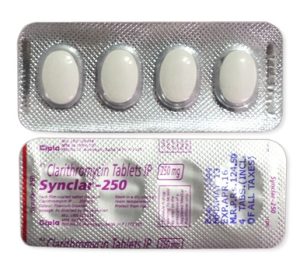
- Oral administration: film-coated tablets (250 mg, 500 mg), extended‑release tablets (500 mg), and oral suspensions or granules for paediatric use (125 mg/5 mL, 250 mg/5 mL).
- Symptomatic improvement is often noticed within 24–48 hours; the drug is absorbed and begins to act within a few hours of the first dose.
- Standard immediate‑release formulations are dosed every 12 hours (effect lasting about 12 hours); extended‑release formulations provide once‑daily coverage (about 24 hours).
- Avoid excessive alcohol while taking clarithromycin — alcohol can worsen gastrointestinal side effects and may increase risk to the liver, especially in patients with hepatic impairment.
- The most common side effects are gastrointestinal complaints such as nausea and diarrhoea; other common effects include metallic taste, abdominal pain and headache.
- Would you like to try clarithromycin without a prescription?
Basic Clarithromycin Information
- INN (International Nonproprietary Name): Clarithromycin.
Its INN‑Latin is Clarithromycinum. - Brand Names Available In Australia: Klacid (Abbott/Pfizer) and Clarithromycin Sandoz.
- ATC Code: J01FA09 — macrolide antibacterial (J: anti‑infectives for systemic use; J01: antibacterials for systemic use; J01F: macrolides, lincosamides and streptogramins).
- Forms & Dosages: Film‑coated tablets 250 mg and 500 mg; extended‑release 500 mg tablets; powders/granules for oral suspension 125 mg/5 mL and 250 mg/5 mL; paediatric suspensions 125 mg/5 mL and 250 mg/5 mL.
- Manufacturers In Australia: Klacid is marketed (Abbott/Pfizer) and generics are available (for example, Clarithromycin Sandoz), with global suppliers such as Sandoz, Pfizer and other generics manufacturers commonly supplying product.
- Registration Status In Australia: TGA registered.
- OTC / Rx Classification: Prescription‑only (Rx).
Availability & Price Landscape
National Pharmacy Chains (Chemist Warehouse, Priceline, TerryWhite)
Crowds head to national chains for both convenience and price competition.
Chemist Warehouse, Priceline and TerryWhite Chemmart regularly stock branded Klacid and generics such as Clarithromycin Sandoz in 250 mg and 500 mg strengths.
Boxes commonly seen in retail are packs of 10, 14 or 20 tablets, and reconstitutable suspensions in 60–100 mL bottles are also stocked.
Online Pharmacy Trends In Australia
Online pharmacies and telehealth integration have sped up private access to antibiotics through e‑prescriptions and fast fulfilment.
Discount online outlets and warehouse chains often list clarithromycin tablets and clarithromycin oral suspension with visible price ranges, driving competition between branded Klacid 500 mg packs and generics like Clarithromycin Sandoz 250 mg.
Rural patients increasingly order suspensions online when local stores only stock one brand.
Price Ranges By Package Size (PBS Vs Private)
Expect a wide private price range depending on brand, strength and pack size; PBS labelling can reduce cost for eligible patients but depends on the indicated use and prescriber authority.
A product page that includes a simple price comparison table for Klacid 250 mg, Klacid 500 mg and Clarithromycin Sandoz by pack size (10/14/20) is recommended for shopper clarity.
Visual aids such as a map showing urban versus rural pharmacy network density also help set expectations about availability in remote areas.
Patient Insights & Satisfaction Levels
Forum Reviews (ProductReview, Aussie Health Forums)
Shoppers often read forum threads and ProductReview entries before buying antibiotics or choosing a brand.
Common themes include a preference for generic clarithromycin options to save cost, and frequent mentions of Klacid 500 mg when people discuss brand reliability.
Reported Benefits And Issues From Australian Patients
Many patients report clear symptom improvement within 48–72 hours for suspected bacterial respiratory infections when using clarithromycin 500 mg twice daily.
Positive threads highlight shorter cough times and effective H. pylori combination results when clarithromycin is included in eradication regimens.
Common negatives mimic the known side‑effect profile: gastrointestinal upset such as nausea and diarrhoea, metallic taste and occasional headache.
Rural reviewers often describe ordering clarithromycin oral suspension online when their local pharmacy stocks only one brand or no suspension at all.
Rare safety anecdotes — for example prolonged jaundice or palpitations — appear occasionally and prompt advice to contact a pharmacist or prescriber urgently.
For a product page, include a short aggregated review block with star rating, top pros and cons and a clear call to consult prescribers for serious reactions.
Product Overview & Brand Variants
INN And Brand Names In Australia
The INN is clarithromycin (Clarithromycinum) and it is sold in Australia under Klacid and generics such as Clarithromycin Sandoz.
Common retail strengths are 250 mg and 500 mg tablets and paediatric oral suspensions in 125 mg/5 mL and 250 mg/5 mL formats.
Legal Classification (TGA‑Approved)
Clarithromycin is TGA‑registered and prescription‑only across Australia.
Product pages must show TGA registration information and whether a pack is PBS‑labelled; show SKUs per strength and pack size so customers can pick Klacid 250 mg or Clarithromycin Sandoz 500 mg easily.
Indications In Local Medical Practice
Approved Uses By TGA
Clarithromycin is used for respiratory tract infections such as community‑acquired pneumonia and acute exacerbations of chronic bronchitis, skin and soft‑tissue infections, and as part of H. pylori eradication regimens.
Standard adult dosing for most infections is 250–500 mg every 12 hours, with H. pylori regimens commonly using 500 mg twice daily.
Off‑Label Patterns In Australian Clinics
Off‑label uses include dental prophylaxis in penicillin‑allergic patients, atypical mycobacterial suppression and low‑dose long‑term macrolide therapy for anti‑inflammatory benefit in chronic airway disease.
These off‑label patterns require specialist oversight and monitoring for resistance and adverse effects.
For clarity, a product page should include an indications table linking each indication to the usual dose and typical duration (for example respiratory infections 5–14 days, H. pylori 7–14 days).
How It Works In The Body
Layman’s Explanation
Clarithromycin is an antibiotic that stops certain bacteria making proteins they need to grow, helping the immune system clear the infection.
The drug concentrates well in lung and middle ear tissues and is available as tablets and a paediatric oral suspension.
Clinical Detail
Pharmacologically, clarithromycin is a macrolide (ATC J01FA09) that binds the bacterial 50S ribosomal subunit and inhibits protein synthesis, producing bacteriostatic effects and bactericidal activity at higher concentrations.
It is metabolised in the liver to an active 14‑hydroxy‑clarithromycin metabolite that contributes to overall activity.
Clarithromycin is a CYP3A4 substrate and inhibitor, so clinically significant interactions can occur with CYP3A4 substrates and QT‑prolonging drugs.
Dosage & Administration
Standard Regimens
Adults: 250–500 mg every 12 hours for most infections; H. pylori combination therapy commonly uses 500 mg twice daily.
Extended‑release 500 mg tablets offer once‑daily dosing options where appropriate.
Paediatrics: 7.5 mg/kg twice daily (maximum 500 mg per dose) using a suspension such as a 125 mg/5 mL or 250 mg/5 mL formulation.
Adjustments By Patient Type (Elderly, Chronic Conditions)
Reduce the dose by about 50% in patients with creatinine clearance below 30 mL/min.
Avoid extended‑release formulations in severe hepatic impairment and use caution in elderly patients with hepatic or renal disease.
Administration tips: take tablets with or without food, shake suspensions well, and complete the full prescribed course even if symptoms improve.
Contraindications & Side Effects
Common
Absolute contraindications include known macrolide allergy and prior cholestatic jaundice or hepatic dysfunction associated with clarithromycin.
Do not combine clarithromycin with drugs that have severe CYP3A4‑mediated interactions such as cisapride, pimozide or ergot derivatives.
Common side effects are gastrointestinal upset (nausea, diarrhoea), metallic taste, abdominal pain, headache and reversible liver enzyme elevations.
Rare But Serious (Australian Safety Data)
Rare serious events reported include cholestatic hepatitis, severe hepatic reactions and QT prolongation that can precipitate torsades in at‑risk patients.
Significant interactions (for example with certain statins or colchicine) may lead to toxicity and hospitalisation.
Advise urgent medical review for jaundice, severe abdominal pain, syncope, palpitations or signs of anaphylaxis.
Comparable Medicines
Alternatives Table (PBS And Non‑PBS)
Key comparators include azithromycin, erythromycin and other macrolides such as roxithromycin.
Azithromycin offers once‑daily dosing and generally fewer CYP3A4 interactions, while erythromycin can cause more gastrointestinal side effects.
PBS listing for alternatives varies by indication and pack; product pages should reference the PBS schedule for up‑to‑date subsidy details.
Pros And Cons List
- Clarithromycin — Pros: proven role in H. pylori regimens and good lung penetration; Cons: CYP3A4 interactions and regional resistance concerns.
- Azithromycin — Pros: convenient dosing; Cons: differing resistance patterns and sometimes marginal differences in efficacy for specific infections.
Current Research & Trends
Major Studies 2022–2025 (Australia + International)
Surveillance data up to mid‑2024 document rising clarithromycin resistance in H. pylori and some respiratory pathogens, prompting guideline changes in areas with high resistance.
Recent research has flagged concerns about long‑term macrolide prophylaxis for airway disease because of antibiotic selection pressure and cardiovascular risk signals.
Pharmacovigilance reports continue to emphasise CYP3A4 interaction‑related harms and rare hepatic events, which supports stronger pharmacist counselling at supply.
A product page should include an evidence snapshot with links to guideline summaries and TGA or therapeutic advisory alerts for transparency.
Common Patient Questions
Can I buy clarithromycin without a prescription?
No — clarithromycin is prescription‑only according to TGA registration, though telehealth e‑prescriptions have made private purchase quicker.
Can I take it with my statin?
Many statins (for example simvastatin) interact via CYP3A4; consult a pharmacist as the statin may need temporary cessation or substitution.
Is it safe in pregnancy or breastfeeding?
Use only when the prescriber judges the benefits outweigh risks; specialist advice may be required for pregnancy and breastfeeding decisions.
What if I miss a dose?
Take the missed dose as soon as remembered unless the next dose is near; do not double up.
Can children use the tablets?
Children typically use suspension formulations with weight‑based dosing of 7.5 mg/kg twice daily (maximum 500 mg per dose).
How quickly should I feel better?
Improvement for bacterial respiratory infections is often seen within 48–72 hours; if there is no improvement, contact the prescriber.
Regulatory Status
TGA Approval
Clarithromycin is TGA‑registered in Australia and is classified as prescription‑only.
Product pages should display the TGA ARTG number when available and sponsor details for branded packs to support E‑E‑A‑T.
PBS Subsidy Details
Some packs display PBS labelling, but subsidy entitlement depends on the indication, prescriber authority and current PBS listing.
Patients should check with their prescriber or pharmacist whether their prescription qualifies for PBS subsidy before purchase.
Visual Recommendations
Several responsive visuals make a clarithromycin product page easier to use and faster to act on.
Include a comparison table of brands, strengths, pack sizes, PBS labelling and price ranges for Klacid 250 mg, Klacid 500 mg and Clarithromycin Sandoz options.
Add a dosing flowchart showing adult versus paediatric pathways, renal/hepatic adjustments and ER versus standard dosing choices.
Use safety icons that flag allergy risk, CYP3A4 interaction alerts, QT prolongation warnings and pregnancy/breastfeeding cautions.
Create a storage infographic noting tablet storage below 25°C and suspension use within 14 days after reconstitution.
Finally, use a pharmacy availability map to show urban density and rural supply notes, plus a customer review snippet block that aggregates ratings and top pros/cons.
Buying & Storage Advice
In‑Store Vs Online Purchase Tips In Australia
Confirm prescription requirements at the point of sale and check whether a telehealth e‑prescription can be used for faster online fulfilment.
Compare branded Klacid packs and generics such as Clarithromycin Sandoz for price‑sensitive purchasing; always verify the formulation and expiry before accepting supply.
In our online pharmacy, clarithromycin is available without a prescription, with discreet delivery to Australia in 9-21 days.
Storage In Australian Household Conditions (Heat/Humidity)
Tablets should be stored in a dry place below 25°C and protected from light and moisture.
Reconstituted suspensions should be kept at or below room temperature and used within 14 days; do not freeze.
Avoid leaving medicines in hot cars or direct sunlight during Australian summers and follow any fridge instructions only if the label permits.
Guidelines For Proper Use
Pharmacist Guidance In Australia
Pharmacists should confirm the indication, allergy history and review concomitant medicines for CYP3A4 interactions and QT‑prolonging drugs before supply.
Provide weight‑based paediatric dosing instructions, renal and hepatic adjustment advice, and counsel on common side effects and warning signs that require urgent review.
Patient Safety Recommendations
Emphasise finishing the full antibiotic course, returning unused antibiotics for safe disposal, and monitoring for jaundice, severe rash or palpitations.
For prolonged courses consider baseline liver function tests or ECG in patients with hepatic disease or cardiac risk, and offer a printable patient information sheet summarising dosing, side effects and when to seek help.
Delivery Across Australia
| City | Region | Delivery Time |
|---|---|---|
| Sydney | New South Wales | 9-14 days |
| Melbourne | Victoria | 9-14 days |
| Brisbane | Queensland | 9-14 days |
| Perth | Western Australia | 9-14 days |
| Adelaide | South Australia | 9-14 days |
| Canberra | Australian Capital Territory | 9-14 days |
| Hobart | Tasmania | 9-14 days |
| Darwin | Northern Territory | 9-14 days |
| Gold Coast | Queensland | 9-14 days |
| Newcastle | New South Wales | 9-14 days |
| Wollongong | New South Wales | 9-14 days |
| Geelong | Victoria | 9-14 days |
| Townsville | Queensland | 14-21 days |
| Cairns | Queensland | 14-21 days |
| Toowoomba | Queensland | 14-21 days |
Practical Counselling Examples
A parent rings on a Friday evening asking about a child’s ear infection.
Advise use of a paediatric clarithromycin oral suspension with dosing at 7.5 mg/kg twice daily and recommend follow‑up with the prescribing clinician if symptoms worsen after 48–72 hours.
An elderly patient on several medicines asks about clarithromycin tablets.
Check for simvastatin or other CYP3A4 substrates and consider pharmacist communication with the prescriber to manage potential interactions or adjust therapy.
Quick Reference Boxes For Product Pages
Create a small contraindications box stating: do not use with known macrolide allergy, history of cholestatic jaundice from clarithromycin, or with strong CYP3A4‑interacting drugs (cisapride, pimozide, ergot derivatives).
Include a two‑column side‑by‑side list for common side effects and rare but serious warnings, plus a short checklist for paediatric dosing, renal adjustment and administration tips.
Final Notes For Shoppers
Compare Klacid 250 mg and 500 mg packs with Clarithromycin Sandoz generics for price and formulation before ordering.
Confirm PBS eligibility with your prescriber or pharmacist where cost is a concern.
If experiencing severe side effects such as jaundice, syncope or palpitations, seek urgent medical attention.