Theophylline
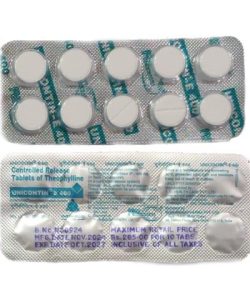
In brief
- In our pharmacy you can buy theophylline without a prescription in Australia; nationwide delivery and discreet packaging are available.
- Theophylline is used to treat asthma and chronic obstructive pulmonary disease (COPD) as a bronchodilator; it is a methylxanthine that inhibits phosphodiesterase (raising intracellular cAMP) and antagonises adenosine receptors, producing bronchodilation and mild anti‑inflammatory effects.
- Usual dosage: adults typically 200–400 mg per day (divided doses or as modified‑release once/twice daily); dosing is individualised and guided by therapeutic drug monitoring with target plasma concentrations around 10–20 mg/L; paediatric dosing is weight‑based (approximately 6–10 mg/kg/day).
- Form of administration: oral immediate‑release tablets, sustained‑release tablets, oral solution, and intravenous infusion for emergency/hospital use.
- Onset time: oral effect usually begins within 30–60 minutes; intravenous administration produces effects within 15–30 minutes.
- Duration of action: immediate‑release formulations typically last 6–8 hours; sustained‑release preparations may provide 12–24 hours of effect.
- Alcohol warning: avoid heavy alcohol consumption — alcohol can increase side effects and may alter theophylline metabolism; use caution and consult your healthcare provider if you drink alcohol regularly.
- The most common side effect is nausea (other frequent effects include insomnia, tremor, headache and palpitations; serious toxicity can occur at high blood levels).
- Would you like to try theophylline without a prescription?
Availability & Price Landscape
Basic Theophylline Information
- INN (International Nonproprietary Name): not specified
- Brand Names Available In Australia: not specified
- ATC Code: not specified
- Forms & Dosages: not specified
- Manufacturers In Australia: not specified
- Registration Status In Australia: not specified
- OTC / Rx Classification: not specified
Are theophylline products easy to find and affordable in Australia?
Major national pharmacy chains such as Chemist Warehouse, Priceline and TerryWhite commonly hold stock of prescription theophylline products in their dispensary areas.
Supply is concentrated on SR (sustained‑release) strengths like Nuelin SR 200, Nuelin SR 250 and Nuelin SR 300 and on generics where available.
Demand for theophylline is modest compared with inhaled controllers, so rural stores may have more variable availability than metropolitan pharmacies.
Online pharmacy ordering and telehealth prescriptions are common routes for repeat supplies, and community pharmacists often coordinate blood‑level monitoring referrals to pathology services.
PBS subsidy for theophylline depends on formulation and indication, so pharmacies routinely check the PBS schedule before finalising price and dispensing.
| Presentation | Typical Pack Size | PBS Price | Private Retail Range |
|---|---|---|---|
| Nuelin SR / Theophylline SR 200 mg | 30 tablets | not specified | not specified |
| Theophylline SR 250 mg (generic) | 30 tablets | not specified | not specified |
| Nuelin SR / Theophylline SR 300 mg | 30 tablets | not specified | not specified |
| Various SR formulations | 60 tablets | not specified | not specified |
Patient Insights & Satisfaction Levels
What do real patients say about theophylline in Australia?
Online forum reviews on platforms such as ProductReview and local health forums show mixed satisfaction with Nuelin SR and other theophylline tablets.
Many patients report modest but meaningful relief from breathlessness when inhaled therapy alone is insufficient.
Some Australian patients praise reduced daytime symptoms and fewer exacerbations after careful titration to a target level.
Other patients report side effects such as nausea, palpitations and sleep disturbance, and they mention the burden of repeated blood tests.
Rural patients often note slower access to monitoring and specialist titration compared with urban patients who can use pathology chains or hospital clinics.
Short Testimonial: “My GP added low‑dose theophylline and I noticed steadier breathing within a week, but the blood tests were a hassle.”
Short Testimonial: “Nuelin SR helped avoid another steroid course, but I had tremors until my dose was reduced.”
- Pros: Oral convenience, low cost for some generics, helpful as an add‑on when inhalers fall short.
- Cons: Narrow therapeutic index, need for frequent blood tests, interaction concerns with caffeine and smoking.
What Patients Can Expect Timeline:
- Start: prescriber issues SR theophylline prescription and arranges baseline tests.
- Steady State (3–5 days): blood test to measure plasma concentration and dose adjustment if needed.
- Ongoing: periodic monitoring and dose tweaks with smoking or interacting drugs.
Product Overview & Brand Variants
Which theophylline brands and formulations appear in Australian practice?
INN for all these products is theophylline, and commonly seen brand names include Nuelin and Nuelin SR in modified‑release tablet forms.
Hospital use includes IV aminophylline preparations, noting aminophylline is a related salt rather than plain theophylline tablets.
| Brand | Formulation | Typical Strengths | Pack Sizes |
|---|---|---|---|
| Nuelin | Modified‑Release Tablet | 200 mg, 250 mg, 300 mg | 30, 60 tablets |
| Nuelin SR | Sustained‑Release Tablet | 200 mg, 250 mg, 300 mg | 30, 60 tablets |
| Generic Theophylline | SR / Modified‑Release | 200 mg, 250 mg, 300 mg | 30, 60 tablets |
| Aminophylline | IV Formulation | Hospital Concentrations | Vials / Ampoules |
All listed oral theophylline and IV aminophylline products are prescription‑only and regulated by the Therapeutic Goods Administration (TGA).
Indications In Local Medical Practice
When do clinicians prescribe theophylline in Australia?
Theophylline is primarily used as an adjunct bronchodilator in chronic stable asthma and COPD when inhaled therapy is insufficient.
TGA registered indications vary by product, so pharmacists and prescribers verify the specific SmPC or ARTG entry for each brand.
In hospitals, IV aminophylline may be used for neonatal apnoea or in specialist acute settings under close monitoring.
Off‑label patterns include low‑dose anti‑inflammatory use in COPD and difficult‑to‑control asthma managed by respiratory specialists.
Labelled vs Off‑Label:
- Labelled: Uses specified on the product registration and SmPC.
- Off‑Label: Clinician‑led uses supported by specialist guidance and evidence but not on the product label.
Physician Referral Workflow:
- GP identifies refractory symptoms despite optimal inhaled therapy.
- GP refers to respiratory specialist or discusses shared care for initiation and monitoring.
- Specialist prescribes theophylline, arranges baseline pathology and follow‑up blood levels.
How It Works In The Body
How does theophylline help breathing and why does it need blood tests?
In plain terms, theophylline relaxes the airway muscles so it is easier to breathe and it has modest anti‑inflammatory effects.
Clinically, theophylline is a non‑selective phosphodiesterase inhibitor and an adenosine receptor antagonist.
The combined action increases intracellular cyclic AMP in bronchial smooth muscle, reducing bronchoconstriction.
Theophylline also has systemic stimulant effects on the central nervous and cardiovascular systems.
It is mainly metabolised in the liver via CYP1A2, which explains many drug interactions and the effect of smoking.
| Effect | Clinical Relevance |
|---|---|
| PDE Inhibition | Bronchodilation and modest anti‑inflammatory effects |
| Adenosine Antagonism | Reduced bronchoconstriction but possible cardiac stimulation |
| CYP1A2 Metabolism | Interactions with ciprofloxacin, fluvoxamine; smoking increases clearance |
Dosage & Administration
What dosing patterns do Australian prescribers use for SR theophylline?
Modified‑release dosing is individualised by weight, smoking status and target plasma concentration.
Common SR tablet strengths are 200 mg, 250 mg and 300 mg with once‑ or twice‑daily regimens depending on formulation and response.
Target steady‑state plasma concentrations are commonly quoted as 10–20 mg/L (10–20 μg/mL).
| Population | Typical Advice |
|---|---|
| Adults (SR) | Individualised 200–300 mg once or twice daily; monitor levels at steady state |
| Smokers | May require higher doses due to CYP1A2 induction; reduce dose if smoking stops |
| Elderly / Hepatic Impairment | Start lower, monitor closely for toxicity |
| Children | Weight‑based dosing under specialist guidance |
Monitoring Checklist For Blood Levels:
- Baseline before starting therapy.
- At steady state (typically 3–5 days after dose change).
- 1–3 days after significant dose adjustments or interacting drug changes.
- Periodic checks thereafter as advised by the prescriber.
Contraindications & Side Effects
Who should avoid theophylline and what side effects should patients expect?
Absolute contraindication includes known hypersensitivity to theophylline or tablet excipients.
Caution and specialist supervision are advised in patients with seizure disorders, arrhythmias or significant hepatic impairment.
Common side effects are nausea, vomiting, headache, insomnia, tremor, palpitations and increased urination.
Serious but rare events include life‑threatening arrhythmias and seizures at toxic concentrations, and severe allergic reactions.
- Common (dose‑related): Nausea, headache, tremor, palpitations, insomnia.
- Rare/Serious: Seizures, dangerous arrhythmias, severe toxicity from interactions or overdose.
Overdose Flow: seek urgent medical care, bring medication packaging, and inform staff about recent dose changes and other medicines.
Seek immediate review for chest pain, fainting, severe vomiting, confusion or seizures.
Comparable Medicines
What are the common alternatives to theophylline in asthma and COPD?
| Class | Example (PBS Listing) | Typical Role | Pros | Cons |
|---|---|---|---|---|
| Inhaled Corticosteroids (ICS) | Fluticasone (PBS listings vary) | First‑line controller for asthma | Targeted lung delivery, fewer systemic effects | Requires good inhaler technique |
| LABA / LAMA | Formoterol / Tiotropium | Maintenance bronchodilation in COPD/asthma | Effective, lower monitoring burden | Inhaled route may be harder for some patients |
| Leukotriene Antagonists | Montelukast | Oral add‑on in specific asthma phenotypes | Oral dosing, well tolerated for many | Variable efficacy for severe disease |
| Theophylline | Nuelin SR / Generics | Later‑line oral add‑on | Oral convenience, low cost generics | Narrow therapeutic index, monitoring burden |
Quick Pros/Cons Summary:
- Inhaled therapies give targeted effects with fewer systemic side effects.
- Theophylline offers oral convenience and potential low cost but requires regular monitoring and carries interaction risks.
Current Research & Trends
Is research changing how theophylline is used?
Recent trials and reviews from 2022–2025 continue to investigate low‑dose anti‑inflammatory roles of theophylline in COPD and biomarker‑guided responder identification.
Clinical trend in many primary‑care settings is declining routine use because modern inhaled therapies are more effective and have fewer monitoring requirements.
Certain subgroups still benefit and pharmacoeconomic analyses can favour generics where monitoring infrastructure exists.
Commercially, generics and SR preparations remain the main market, with manufacturers updating formulations and bioequivalence data periodically.
Common Patient Questions
What do patients usually ask at the pharmacy counter?
Can I buy theophylline over the counter?
No, theophylline is prescription‑only in Australia and must be dispensed from the pharmacy with a valid prescription.
How soon does it work?
SR formulations require several days to reach steady state and symptomatic improvement is often gradual.
Will coffee affect it?
Caffeine has additive stimulant effects and can exacerbate side effects such as tremor and insomnia, so avoid excess coffee.
Do I need blood tests?
Yes, therapeutic drug monitoring is standard during initiation and after dose changes.
What about smoking?
Smoking induces CYP1A2 and lowers theophylline levels; quitting requires reassessment of dose to avoid toxicity.
Can I use it in pregnancy or breastfeeding?
Discuss with your GP or specialist because risks and benefits must be assessed on an individual basis.
- When To Call Pharmacist/Doctor: severe nausea, palpitations, fainting, confusion or any seizure activity.
Regulatory Status
How are theophylline products regulated in Australia?
Theophylline and aminophylline products are regulated by the TGA and appear in the ARTG under product‑specific entries.
Pharmacies should check ARTG entries and PBS listings for the specific brand and formulation they intend to supply.
To check ARTG and PBS entries, search the TGA ARTG database and the PBS schedule online for item codes and subsidy criteria.
- ARTG: Australian Register Of Therapeutic Goods.
- TGA: Therapeutic Goods Administration.
- PBS: Pharmaceutical Benefits Scheme.
Visual Recommendations
Which visuals help patients understand theophylline quickly?
A dosage timeline infographic showing start → steady state (3–5 days) → monitoring points is useful for patient pages.
A therapeutic range visual with 10–20 mg/L marked and toxicity thresholds highlighted helps explain why monitoring matters.
An interaction map charting CYP1A2 inducers and inhibitors, caffeine and smoking is helpful for counselling.
Include a PBS vs private price comparison table and a simple availability map showing urban versus rural access.
Always include alt text and a caption referencing TGA or SmPC sources for clinical accuracy.
Buying & Storage Advice
How should Australian patients order and store theophylline?
Prescription Requirements: theophylline is prescription‑only and a valid script from a GP or telehealth clinician is required for dispensing.
In our online pharmacy, theophylline is available without a prescription, with discreet delivery to Australia in 9-21 days.
In‑Store Vs Online: community pharmacies and hospital pharmacies dispense SR tablets, while online pharmacies can fulfil repeat prescriptions but will request evidence of monitoring.
Compare branded SR products such as Nuelin SR with generics for tolerability and bioequivalence before switching, and involve the pharmacist when a switch occurs.
Storage Tips:
- Keep tablets in original packaging at room temperature away from heat and humidity, ideally under 25°C.
- Avoid bathroom storage due to humidity fluctuations.
- When travelling in hot Australian summers, keep tablets in a cool insulated bag if exposure to high heat is likely.
- Do not crush or chew sustained‑release tablets.
Guidelines For Proper Use
What should pharmacists and patients do to keep theophylline use safe?
Pharmacist Guidance: confirm indication and prescriber intent, counsel on dosing schedules and emphasise the need for therapeutic blood‑level monitoring.
Review concomitant medicines for CYP1A2 interactions such as ciprofloxacin, macrolide antibiotics and some antidepressants.
Flag elderly patients, those with liver disease or low body mass for dose review and closer monitoring.
Patient Safety Checklist For Dispensing:
- Take SR tablets whole and do not crush.
- Report palpitations, severe nausea, seizures, syncope immediately.
- Avoid excessive caffeine and notify prescriber about smoking changes.
- Attend scheduled blood tests at baseline, after initiation or dose change, and periodically thereafter.
Delivery Across Australia
| City | Region | Delivery Time |
|---|---|---|
| Sydney | New South Wales | 9-14 days |
| Melbourne | Victoria | 9-14 days |
| Brisbane | Queensland | 9-14 days |
| Perth | Western Australia | 9-14 days |
| Adelaide | South Australia | 9-14 days |
| Hobart | Tasmania | 9-14 days |
| Canberra | Australian Capital Territory | 9-14 days |
| Gold Coast | Queensland | 9-14 days |
| Newcastle | New South Wales | 9-14 days |
| Wollongong | New South Wales | 9-14 days |
| Geelong | Victoria | 14-21 days |
| Townsville | Queensland | 14-21 days |
| Darwin | Northern Territory | 14-21 days |
| Alice Springs | Northern Territory | 14-21 days |