Namenda
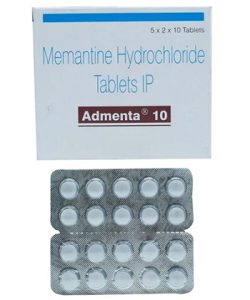
In brief
- In our pharmacy, you can buy namenda without a prescription, with delivery throughout Australia and discreet, anonymous packaging; note that memantine is officially prescription-only in many countries, so consult a healthcare professional if unsure.
- Namenda (memantine) is used for moderate to severe Alzheimer’s disease and works as an N‑methyl‑D‑aspartate (NMDA) receptor antagonist, modulating glutamatergic neurotransmission to reduce excitotoxicity.
- The usual dose for adults is to start at 5 mg once daily and increase by 5 mg weekly to a maintenance of 10 mg twice daily (20 mg/day); Namenda XR is started at 7 mg once daily and titrated weekly to a maximum of 28 mg once daily; reduce dose in severe renal impairment (e.g. max 5 mg twice daily).
- Administered orally as tablets (5 mg, 10 mg), oral solution (10 mg/mL) or extended‑release capsules (XR: 7/14/21/28 mg), taken by mouth.
- Onset: symptomatic benefits may begin to appear within 1–4 weeks, though meaningful clinical response is often assessed after several weeks to months.
- Duration of action: each dose provides roughly 24‑hour coverage; memantine has a long half‑life so effects persist and steady state is reached over a few weeks.
- Alcohol warning: avoid excessive alcohol — combining alcohol with memantine can increase drowsiness, dizziness and cognitive impairment; use caution.
- The most common side effec is dizziness.
- Would you like to try namenda without a prescription?
Basic Namenda Information
- INN (International Nonproprietary Name): Memantine
- Brand Names Available In Australia: Ebixa, GenRx Memantine
- ATC Code: N06DX01 — “N06” (Psychoanaleptics), “DX01” (Other anti‑dementia drugs, memantine)
- Forms & Dosages: Tablets 5mg, 10mg (common: 10mg); oral solution 10mg/mL (common internationally); XR capsules 7/14/21/28mg (US/Canada)
- Manufacturers In Australia: Lundbeck and GenRx listed as suppliers/MAHs for Australia
- Registration Status In Australia: Registered brands include Ebixa and GenRx Memantine (details of registration numbers not specified)
- OTC / Rx Classification: Prescription only (S4) under local regulations
Availability & Price Landscape
National Pharmacy Chains
Chemist Warehouse, Priceline and TerryWhite Chemmart are the major retail networks Australians use to fill dementia prescriptions.
These chains commonly stock generics and branded memantine such as Ebixa and GenRx Memantine as 10 mg tablets.
Community and independent pharmacies also dispense memantine for valid prescriptions and can order packs if out of stock.
Online Pharmacy Trends In Australia
Telehealth e‑prescriptions are increasingly used and can be linked to pharmacy delivery services for convenience.
Some discount chains accept private scripts and offer home delivery and subscription refills for dementia medicines.
Customers should verify pharmacy registration and avoid unverified import sites when ordering memantine online.
Price Ranges By Package Size (PBS Vs Private)
The supplied data does not specify exact retail prices or private price bands for namenda or generic memantine in Australia.
Common pack sizes follow standard blister counts (28, 30, 56, 98 tablets) for 10 mg tablets, which influences cost per month.
Check current PBS listing and the dispensing pharmacy for up‑to‑date subsidised costs and private prices.
Patient Insights & Satisfaction Levels
Forum Reviews
Australian carers and patients post experiences on sites such as ProductReview and local caregiver forums about memantine use.
Common themes include careful monitoring by carers, price sensitivity and reliance on pharmacist counselling for confidence in therapy.
Reports often note better satisfaction when local pharmacists or telehealth prescribers provide clear instructions and follow‑up.
Reported Benefits And Issues From Australian Patients
Many carers report modest improvements in agitation or daily function for moderate–severe Alzheimer’s when memantine is added to care.
Other families see minimal perceptible change and weigh benefit against cost when deciding to continue therapy.
Frequently reported side effects mirror clinical data: dizziness, headache, constipation and occasional confusion.
Adherence can be challenging in dementia care due to missed doses, and carers use pill organisers or pharmacist blistering to help.
- Top Patient‑Reported Outcomes: modest reduction in agitation, mixed cognitive change, improved sleep in some, dizziness, constipation, variable adherence.
Product Overview & Brand Variants
INN And Brand Names In Australia
Memantine is the International Nonproprietary Name and appears under ATC code N06DX01.
Australian brands listed in the supplied data include Ebixa and GenRx Memantine, usually as 10 mg tablets.
Internationally, the same active ingredient is sold as Namenda, Ebixa, Axura and others, depending on the market.
Legal Classification (TGA‑Approved)
Memantine is a prescription‑only medicine (S4) and requires a valid prescription for supply in Australia under local regulation.
Suppliers and marketing authorisation holders for Australia include Lundbeck and GenRx according to the provided information.
Typical packaging locally is blister packs in counts such as 28, 30, 56 or 98 tablets of 10 mg strength.
Indications In Local Medical Practice
Approved Uses By TGA
The principal indication is symptomatic treatment of moderate to severe Alzheimer’s disease in adults.
Standard adult oral dosing is titration from 5 mg once daily increasing by 5 mg weekly to 10 mg twice daily (20 mg/day) for immediate‑release tablets.
Namenda XR dosing regimens (titrating to 28 mg once daily) are described for jurisdictions with XR availability but are primarily North American formulations.
Off‑Label Patterns In Australian Clinics
Some clinicians prescribe memantine selectively for mixed or vascular cognitive impairment or prominent neuropsychiatric symptoms, though evidence is less definitive for these uses.
Off‑label prescribing should follow specialist or geriatrician advice and be documented in the clinical record.
Treatment decisions in practice are influenced by subsidy eligibility, carer reports and realistic functional goals rather than expectations of disease modification.
How It Works In The Body
Layman’s Explanation
Memantine works by calming overactive glutamate pathways that can contribute to confusion and agitation in more advanced dementia.
It acts on NMDA receptors to reduce excessive stimulation, which may help some patients with symptoms rather than curing the disease.
Clinical Detail
Scientifically, memantine is an N‑methyl‑D‑aspartate (NMDA) receptor antagonist, ATC N06DX01, that blocks NMDA receptor ion channels in a voltage‑dependent manner.
This blockade limits harmful calcium influx into neurons during excessive glutamatergic activity and differs mechanistically from acetylcholinesterase inhibitors.
Memantine is orally absorbed and eliminated predominantly by renal excretion, so renal impairment affects dosing requirements.
Conditions or drugs that alkalinise urine can affect memantine elimination and may raise plasma levels.
Dosage & Administration
Standard Regimens
For standard memantine tablets the adult titration is start 5 mg once daily and increase by 5 mg weekly to maintenance of 10 mg twice daily (20 mg/day).
Namenda XR dosing (start 7 mg once daily advancing weekly to 28 mg once daily) is noted in international prescribing but is uncommon in Australian supply.
Oral solution formulations, where available, are typically 10 mg/mL and should be measured with an oral syringe for accuracy.
Adjustments By Patient Type (Elderly, Chronic Conditions)
Elderly patients do not normally require routine dose reductions but renal function should be monitored.
Severe renal impairment (CrCl 5–29 mL/min) requires a reduced maximum of 5 mg twice daily according to supplied data.
Children are not approved for use, and hepatic impairment warrants caution with increased monitoring although specific adjustments are not clearly defined.
If a dose is missed, take it when remembered unless it is close to the next dose; do not double up.
Contraindications & Side Effects
Common
Absolute contraindication is known allergy to memantine or excipients.
Common adverse events include dizziness, headache, constipation, confusion, hypertension, fatigue and back pain.
Cough and occasional liver enzyme elevations have been reported infrequently.
Rare But Serious (Australian Safety Data)
Rare but serious events may include seizures, severe hypersensitivity and significant neuropsychiatric changes such as hallucinations or marked agitation.
Overdose typically requires supportive care and may present with agitation, hallucinations or depressed consciousness.
Pharmacists should prompt patients to report severe adverse effects to the prescriber and to the TGA adverse event reporting system as part of local safety practice.
Comparable Medicines
Alternatives Table (PBS And Non‑PBS)
| Medicine | PBS Status | Dosing (Typical) |
|---|---|---|
| Memantine (Ebixa, GenRx) | PBS listing details not specified — check current PBS | 5mg titrate to 10mg twice daily |
| Donepezil (Aricept) | PBS status not specified in supplied data | 5–10mg once daily (AChE inhibitor) |
| Rivastigmine (Exelon) | PBS status not specified in supplied data | Patch or oral formulations — dose varies |
| Galantamine (Reminyl) | PBS status not specified in supplied data | Twice daily or extended‑release dosing |
Pros And Cons List
Memantine Pros: different mechanism (NMDA receptor antagonist), well tolerated by many, suitable adjunct to acetylcholinesterase inhibitors for moderate–severe disease.
Memantine Cons: symptomatic benefit only, limited effect in mild disease, renal dosing considerations, XR forms not widely available locally.
Current Research & Trends
Major Studies 2022–2025 (Australia + International)
Recent work continues to assess combination therapy benefits and real‑world registry data for memantine in mixed pathology dementia.
Trials have focused on symptomatic endpoints including cognition, activities of daily living and behavioural symptoms, with mixed but modest signals of benefit in moderate–severe cases.
Research into memantine’s role for neuropsychiatric symptoms and biomarker studies is ongoing but has not shown disease‑modifying effects to date.
Internationally, XR formulations and combination products remain points of evaluation, but uptake in Australia is limited given local availability.
Common Patient Questions
FAQs From Australian Pharmacy Consultations
How Long Until I See An Effect?
Some carers notice behavioural improvements within weeks, but cognitive changes may take months and results vary between individuals.
Can It Be Taken With Donepezil?
Yes; memantine is commonly combined with acetylcholinesterase inhibitors following prescriber advice.
What If My Relative Is Confused Or Dizzy?
Contact the pharmacist or GP to review dosing and interactions; consider renal function checks and monitor for other causes of dizziness.
Is It On The PBS?
Eligibility and subsidy details change — see the regulatory section and check the PBS schedule with the prescriber or pharmacist for current criteria.
How To Store At Home In Australian Climate?
Store at room temperature, avoid heat and humidity and keep away from direct sunlight; see storage section for specifics.
Regulatory Status
TGA Approval
Memantine, ATC N06DX01, is prescription‑only under local regulation and requires a valid prescription for legal supply in Australia.
Brands available locally include Ebixa and GenRx Memantine as supplied in the product information.
PBS Subsidy Details
Specific PBS listings, subsidy eligibility criteria and authority requirements are not specified in the supplied data and should be checked on the official PBS database or with the prescriber.
International approvals include US FDA approval for Namenda (2003) and Namenda XR (2010) as background information.
Healthcare professionals should use PBS authority pathways where applicable for subsidised access and document eligibility accordingly.
Visual Recommendations
Infographics: PBS Pricing, Pharmacy Networks
Recommended visuals for a product page include a pricing infographic that compares private cost versus potential PBS subsidised cost and common pack sizes.
Include a pharmacy network map showing distribution across Chemist Warehouse, Priceline and TerryWhite Chemmart and telehealth fulfilment options.
Provide a simple mechanism‑of‑action diagram showing NMDA antagonism at the synapse and a dosing titration flowchart for carers.
Make visuals accessible with large fonts and a downloadable PDF dosing chart for families and rural customers.
Buying & Storage Advice
In‑Store Vs Online Purchase Tips In Australia
Obtain a valid prescription; telehealth e‑scripts are acceptable in most cases and can be sent directly to a dispensing pharmacy.
Compare prices and availability across Chemist Warehouse, Priceline, TerryWhite Chemmart and local community pharmacies.
Avoid unverified online suppliers and do not import medicines without a proper prescription and appropriate regulatory checks.
In our online pharmacy, namenda is available without a prescription, with discreet delivery to Australia in 9‑21 days.
Storage In Australian Household Conditions (Heat/Humidity)
Store tablets at room temperature, ideally 20–25°C, allowing occasional excursions to 15–30°C as indicated in the product information.
Protect oral solution from light and do not freeze; keep containers tightly closed.
Do not leave medicines in cars or in direct sun during hot Australian summers; use climate‑controlled storage at home.
- Buying Safety Checklist: valid prescription, registered pharmacy, check brand/manufacturer, confirm blister counts, avoid imports without paperwork.
- Storage Do’s And Don’ts: keep in labelled container, avoid humidity, keep out of reach of children, return outdated stock to the pharmacy.
Guidelines For Proper Use
Pharmacist Guidance In Australia
Confirm the indication and review renal function where appropriate before dispensing memantine.
Provide a clear titration schedule and counselling on common side effects and when to seek medical review.
Document the supply, advise on interactions with urine‑alkalinising agents and flag severe renal impairment for dose adjustment.
Patient Safety Recommendations
Offer a dosing card and recommend adherence aids such as pill organisers or pharmacist blistering services for carers managing multiple medicines.
Arrange reviews at regular intervals to assess benefit and tolerability and advise reporting adverse events to the TGA.
Pharmacist Counselling Script: confirm name and dose, explain titration steps, list common side effects, instruct on missed dose and when to contact GP or emergency services.
Printable one‑page safety checklist for carers should include dose times, monitoring points and emergency contacts.
Delivery Across Australia
| City | Region | Delivery Time |
|---|---|---|
| Sydney | New South Wales | 9–14 days |
| Melbourne | Victoria | 9–14 days |
| Brisbane | Queensland | 9–14 days |
| Perth | Western Australia | 9–14 days |
| Adelaide | South Australia | 9–14 days |
| Canberra | Australian Capital Territory | 9–14 days |
| Hobart | Tasmania | 9–14 days |
| Darwin | Northern Territory | 9–14 days |
| Gold Coast | Queensland | 9–14 days |
| Newcastle | New South Wales | 9–14 days |
| Wollongong | New South Wales | 9–14 days |
| Cairns | Queensland | 14–21 days |
| Townsville | Queensland | 14–21 days |
| Geelong | Victoria | 9–14 days |
| Ballarat | Victoria | 14–21 days |
Final Notes
Memantine is supplied in Australia primarily as 10 mg tablets under brands such as Ebixa and GenRx Memantine according to the product information provided.
Always confirm current PBS status with the prescriber or pharmacist and check renal function when initiating or adjusting dose.
If carers have questions about dosing, side effects or home storage in hot weather, encourage them to speak with the dispensing pharmacist for tailored advice.